

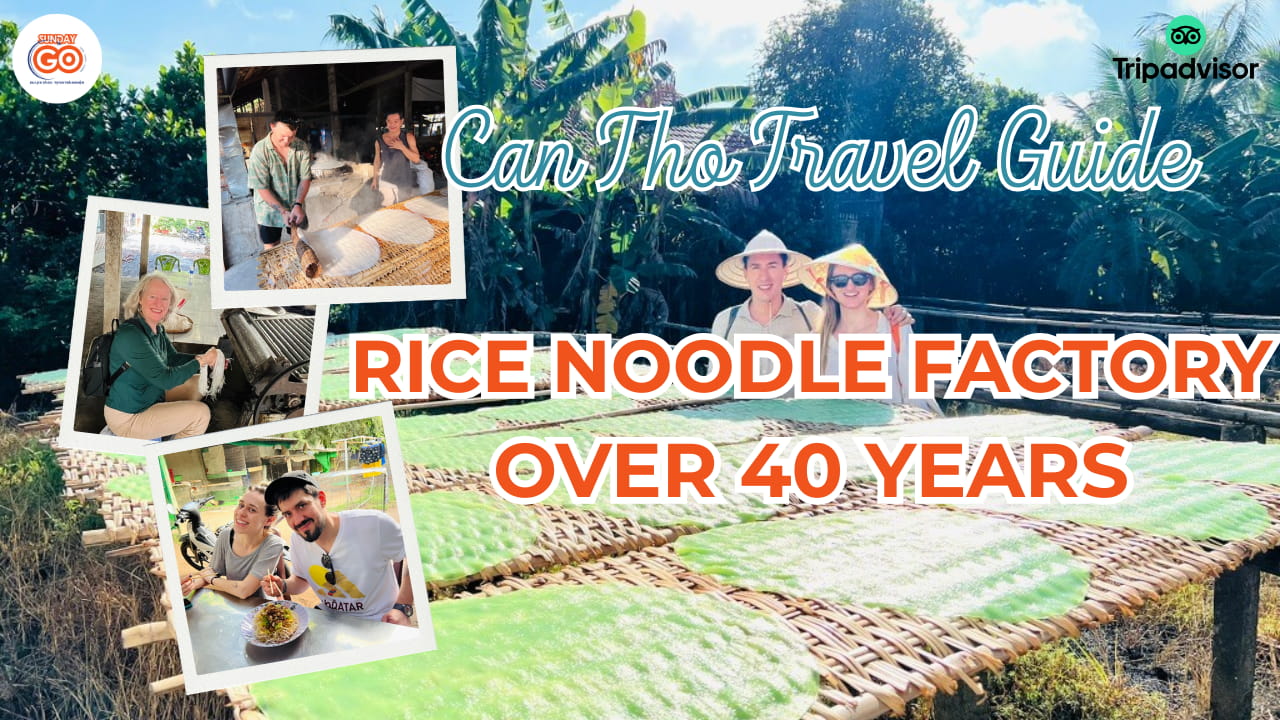
Welcome to the land of “white rice and clear water.” Can Tho is not just the bustling capital of the Mekong Delta; it is the beating heart of Vietnam’s rice culture. While thousands of travelers flock to the Cai Rang Floating Market every morning, the true soul of the region’s cuisine lies hidden just a few kilometers away, tucked along the small canals: the traditional Rice Noodle Factory in Can Tho.
At Sunday Go, with over 5 years of experience crafting bespoke journeys for international guests, we believe a trip to the Delta is incomplete without witnessing the transformation of a simple rice grain into the famous Hu Tieu. Whether you are a foodie, a photographer, or a culture seeker, this guide is your key to unlocking one of the most authentic experiences in Southern Vietnam.
Why Visit a Traditional Rice Noodle Factory?
In a world of mass production, the rice noodle factory in Can Tho stands as a testament to patience and precision. This is not a sterile industrial plant. It is a sensory workshop where artisanal skills have been passed down for generations.
When you step off the boat, you are greeted by the warm, sweet aroma of toasted rice husk fuel. You feel the heat radiating from the steamers and hear the rhythmic clack-clack of the cutting machines. These factories produce the essential ingredient for Hu Tieu (noodle soup)—the breakfast of choice for millions of Vietnamese people, from the river traders on the floating market to the street vendors in Saigon.
The Titans of Taste: Sau Hoai vs. Chin Cua
For travelers searching for the best rice noodle factory in Can Tho, the choice usually comes down to two legendary household names located near the Rau Ram Bridge: Sau Hoai and Chin Cua.
While both factories offer excellent insights into the craft, they cater to slightly different vibes.
Sau Hoai’s Rice Noodle Factory (The Innovator)
Sau Hoai is arguably the most famous name in the region. Mr. Sau Hoai is not just a noodle maker; he is a culinary inventor. He is widely credited with creating the viral “Pizza Hu Tieu” (Pizza Noodle), a dish that transformed his factory into a major tourist attraction.
- The Vibe: Bustling, energetic, and tourist-friendly. There is a large souvenir shop and plenty of seating to enjoy the food.
- Best For: First-time visitors who want to try the famous Pizza Noodle and enjoy a lively atmosphere.
Chin Cua Rice Noodles Factory (The Artist)
Chin Cua (Uncle Nine Cua) takes a more colorful approach. This factory is renowned for its “Rainbow Noodles,” where the noodles are dyed using 100% natural ingredients from the Delta’s gardens.
- The Vibe: Rustic, photogenic, and slightly more tranquil. The sight of drying racks filled with orange, purple, and green noodles is a photographer’s dream.
- Best For: Photographers and travelers who appreciate natural ingredients and a “farm-to-table” aesthetic.
Quick Comparison: Which One Should You Choose?
| Feature | Sau Hoai’s Factory | Chin Cua’s Factory |
|---|---|---|
| Signature Dish | Pizza Hu Tieu (Deep-fried noodle) | Rainbow Noodles (Natural Veggie Dye) |
| Atmosphere | Lively, Busy, Commercial | Rustic, Colorful, Photogenic |
| Key Experience | Eating the Pizza Noodle | Seeing the colorful drying racks |
| Location | Near Rau Ram Bridge | Near Rau Ram Bridge |
| Ideal For | Foodies & Families | Photographers & Nature Lovers |
From Grain to Bowl: The Traditional Process
Making traditional Hu Tieu is a labor of love that relies heavily on the weather. The process typically uses Ham Chau rice, a local variety known for its high starch content which gives the noodle its signature chewy texture.
- Soaking & Grinding: The rice is soaked overnight and ground into a fine, milky white flour liquid. At Chin Cua, this is where vegetable juices (like pandan leaf or beetroot) are added for color.
- Steaming (The Heat): The batter is spread thinly over a cloth steamer stretched over a pot of boiling water, heated by rice husks. It takes just 45 seconds to cook a perfect, paper-thin sheet.
- Sun Drying (The Timing): This is the most critical step. The round sheets are placed on woven bamboo racks and dried under the sun. They must be dried for 3-4 hours—too long and they shatter; too short and they mold.
- Cutting (The Rhythm): Once dried to a “semi-soft” state, the sheets are fed through a machine that shreds them into thousands of thin strands.
Sunday Go Insider Tip: Most tours allow you to try your hand at the steaming station. It looks easy, but lifting the delicate rice paper without tearing it requires a master’s touch!
Must-Try Culinary Masterpiece: “Pizza Hu Tieu”
You cannot leave the Rice noodle factory in Can Tho without tasting the region’s unique snack: Pizza Hu Tieu.
Despite the name, it involves no cheese or tomato sauce. The “crust” is made from a nest of fresh rice noodles deep-fried until golden and crispy. It is then topped with savory ingredients like stewed pork, peanuts, fried eggs, herbs, and a drizzle of chili sauce.
- Taste Profile: A satisfying crunch followed by the savory richness of the meat and the kick of the chili.
- Price: Affordable and perfect for a mid-morning snack after your floating market tour.
Location & How to Get There
The factories are located in the An Binh Ward, roughly 5-6 kilometers from Can Tho city center.
Option 1: By Boat (The Scenic Route)
This is the most popular way to arrive. The factories are situated along the river canals, making them a perfect stop after visiting the Cai Rang Floating Market.
- The Route: From Ninh Kieu Wharf → Cai Rang Floating Market → Small Canals → Noodle Factory.
- Sunday Go Recommendation: Book a private sampan. Unlike large tourist boats, a small sampan can navigate the narrower, greener canals leading to the factory, offering a peaceful glimpse of local life.
Option 2: By Road (The Adventure Route)
You can reach the factories by motorbike or car via Lo Vong Cung Street. However, the roads can be narrow and winding. For a stress-free experience, a guided car or motorbike tour is recommended.
Sunday Go’s Expert Travel Tips
To ensure you have the best experience, keep these tips in mind:
- Go Early: The best time to visit is between 6:30 AM and 9:00 AM. This is when the factory is most active, with steam rising and workers busy everywhere. If you arrive after 10:00 AM, production often stops as the sun gets too hot.
- Dress Comfortably: The factories are open-air but can get warm due to the steamers and the tropical climate. Wear light, breathable fabrics.
- Combine Your Trip: A standalone trip to the factory is short (30-45 minutes). We highly recommend combining it with a Cacao Farm visit or a fruit garden tour for a full half-day itinerary.
FAQ: Common Questions About Can Tho Rice Noodle Factories
Q: Is there an entrance fee?
A: Generally, entrance is free. The families earn money through selling food (like the Pizza Noodle), drinks, and packaged dried noodles for you to take home.
Q: Are the colorful noodles safe to eat?
A: Yes, absolutely. Factories like Chin Cua use natural ingredients: orange from Gac fruit, green from Pandan leaves, and purple from magenta plants. No artificial chemicals are used.
Q: Can I buy noodles as a souvenir?
A: Yes. Dried rice noodles are an excellent souvenir as they are lightweight, cheap, and have a long shelf life. They are perfect for making Pad Thai or noodle soup back home.
Conclusion
A visit to a Rice noodle factory in Can Tho is more than just a sightseeing stop; it is a journey into the heritage of the Mekong Delta. Watching a family preserve a craft that has fed generations offers a deep connection to the local culture that you simply cannot get from a guidebook.
Whether you crave the crunch of a Pizza Noodle at Sau Hoai or the vibrant colors of Chin Cua, the experience is authentic, educational, and delicious.
