

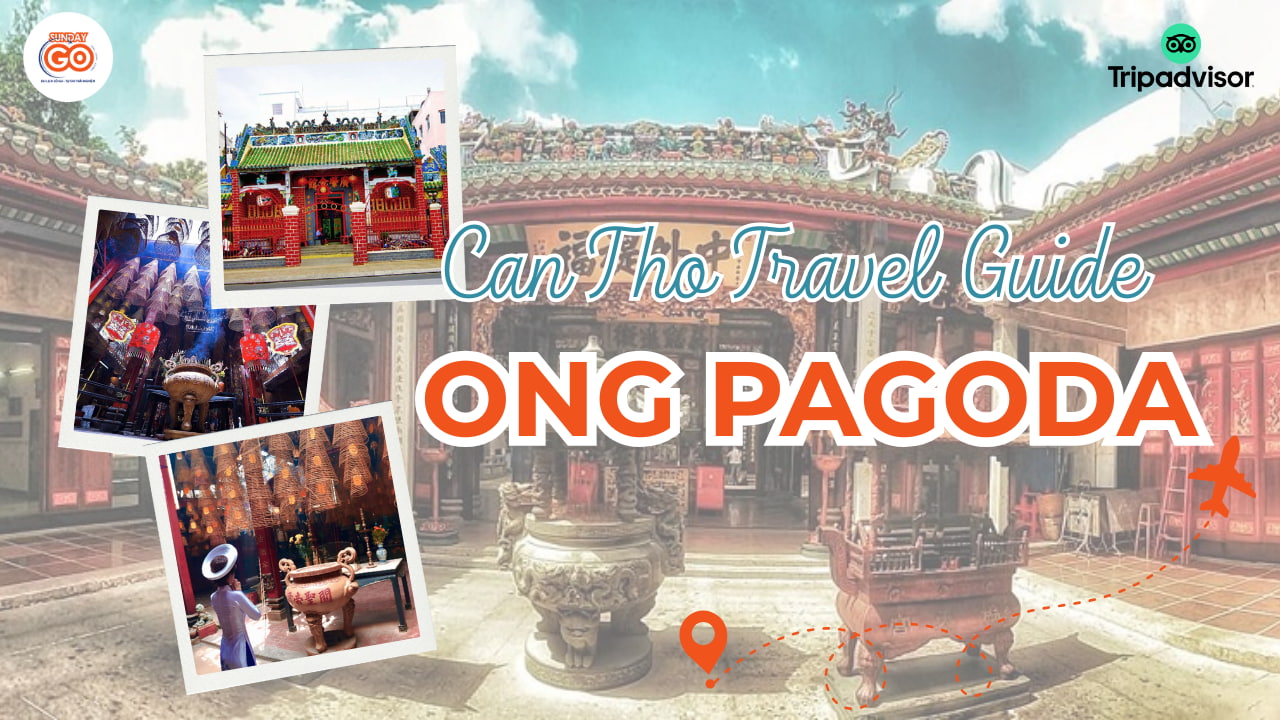
Ong Pagoda – A Step Back in Time
Imagine stepping off the bustling streets of Can Tho into a sanctuary where time stands still. The air is thick with the scent of sandalwood, and sunlight pierces through the smoke of giant spiraling incense coils, illuminating 130 years of history. This is Ong Pagoda Can Tho, a mesmerizing blend of spiritual devotion and architectural mastery nestled in the heart of the Mekong Delta.
While many travelers flock to the famous Cai Rang Floating Market, those seeking a deeper cultural connection—and truly stunning photography—know that Ong Pagoda is the city’s hidden soul. It is not just a place of worship; it is the most colorful and photogenic Chinese Assembly Hall in the region.
At Sunday Go, we have guided international guests through these wooden doors for over five years. We often tell our travelers: “The floating market is the face of Can Tho, but Ong Pagoda is its spirit.” Whether you are a history buff or a photographer chasing the perfect light, this guide will ensure your visit is unforgettable.
History & Significance
Despite its common name, Ong Pagoda (or Ong Temple Can Tho) is technically not a Buddhist pagoda. It is the Quang Trieu Assembly Hall, established by the Cantonese community from Guangdong, China.
Construction began in 1894 and was completed in 1896, making it one of the rare ancient structures in Can Tho to retain its original architecture for over a century. The temple is dedicated to Quan Cong, a legendary general symbolizing loyalty, justice, and bravery.
Locals affectionately call it Ong Pagoda because “Ong” is a respectful term for the deity worshipped inside. Its historical importance was officially recognized when the Ministry of Culture designated it a National Architectural and Artistic Heritage Site in 1993.
Architecture: The Art of Light and Smoke
What makes this temple architecturally unique is its layout, built in the shape of the Chinese character “Quoc” (國), meaning “Nation” or “Country”. This design features a closed square of interconnected buildings surrounding a central open-air courtyard, known as the “Heaven’s Well”.
This “Heaven’s Well” is a masterclass in Feng Shui. It allows natural light to flood the sanctuary while venting the thick smoke from the incense coils, balancing the “Yang” energy within the temple.
As you explore, look closely at the details:
- The Roof: Covered in yin-yang tiles and adorned with green-glazed ceramic ridges featuring dragons and phoenixes.
- The Wood: The entire framework is constructed from precious hardwood imported from China, resisting termites and decay for over 130 years.
- The Reliefs: Intricate porcelain carvings depict classic Chinese legends, adding a layer of storytelling to every pillar and beam.
Visitor’s Guide: Exploring the Sanctuary
Entering Ong Pagoda Can Tho, you are greeted by a solemn yet vibrant atmosphere. The main altar enshrines the statue of Quan Cong, flanked by the God of Fortune and the God of the Soil.
The Incense Coils
The most striking feature for international visitors is the ceiling, hung with hundreds of large, spiral incense coils. This is a living tradition. Devotees purchase these coils, write their wishes on red tags, and hang them to burn continuously for up to two weeks.
Sunday Go Tip: You can participate in this ritual. It is a peaceful way to leave a prayer for your family’s health or business success. If you are on one of our tours, we can assist you with the proper etiquette for writing your wish tag.
Practical Information
When planning your trip to Ong Pagoda Can Tho, keep these logistics in mind to ensure a smooth visit.
- Exact Location: 32 Hai Ba Trung Street, Tan An Ward, Ninh Kieu District, Can Tho.
- Opening Hours: Daily from 7:00 AM – 6:00 PM.
- Entrance Fee: Free. There is a donation box if you wish to contribute to the temple’s maintenance.
- Best Time to Visit:
- For Photography: Mid-morning (9-11 AM) for the best light.
- For Culture: The 1st or 15th of the Lunar Month, or during the Quan Cong Festival (24th day of the 6th lunar month) when the temple is liveliest.
Cultural Etiquette: Do’s and Don’ts
As a respectful traveler, following local customs ensures you are welcomed warmly. This is especially important in a sacred space like Ong temple Can Tho.
- Do: Dress modestly. Sleeveless shirts are generally okay if not too revealing, but avoid very short shorts.
- Do: Take off your hat and sunglasses upon entering the main hall.
- Don’t: Point your finger directly at the statues of the deities; use an open hand if you need to gesture.
- Don’t: Stand with your back directly to the main altar to take a selfie. Angle yourself to the side instead.
- Don’t: Step on the raised wooden threshold at the door. You must step over it. This is a traditional sign of respect in Chinese architecture.
Suggested Itinerary by Sunday Go
Make the most of your day in Can Tho with this curated schedule that balances adventure with culture.
- 05:30 AM: Depart for Cai Rang floating farket. Experience the sunrise and have breakfast on a boat.
- 09:00 AM: Return to Ninh Kieu Wharf.
- 10:00 AM: Walk across the street to Ong Pagoda. This is when the light rays are strongest for photography.
- 11:30 AM: Enjoy a local lunch of Nem Nuong (Grilled Pork Rolls) or riverside dining nearby.
- 1:00 PM: Visit the nearby Can Tho Museum or relax at a cafe.
Why choose Sunday Go? We specialize in private, premium tours for international guests. We handle the boat logistics, the cultural explanations, and ensure you get the best photos without the crowds.
FAQ: Common Questions About Ong Pagoda
Is Ong Pagoda a Buddhist temple?
No, it is a Chinese Assembly Hall primarily worshipping Quan Cong, a Taoist/Folk religion deity, though it also houses altars for the Goddess of Mercy, showing the fusion of beliefs in Vietnam.
Can I light incense inside?
Usually, visitors are encouraged to light incense at the large urns outside the main hall to protect the antique wood and keep the air breathable.
How long does a visit take?
Most visitors spend about 30 to 45 minutes here. It is a compact site, but the details deserve a slow pace.
Conclusion
Ong Pagoda Can Tho is more than just a stop on a map; it is a vibrant testament to the enduring heritage of the Mekong Delta. From the intricate wood carvings that have survived wars to the silent prayers rising with the incense smoke, every corner tells a story.
Whether you are here to capture award-winning Ong pagoda photos or simply to find a moment of peace, this temple offers a profound connection to the past.
