

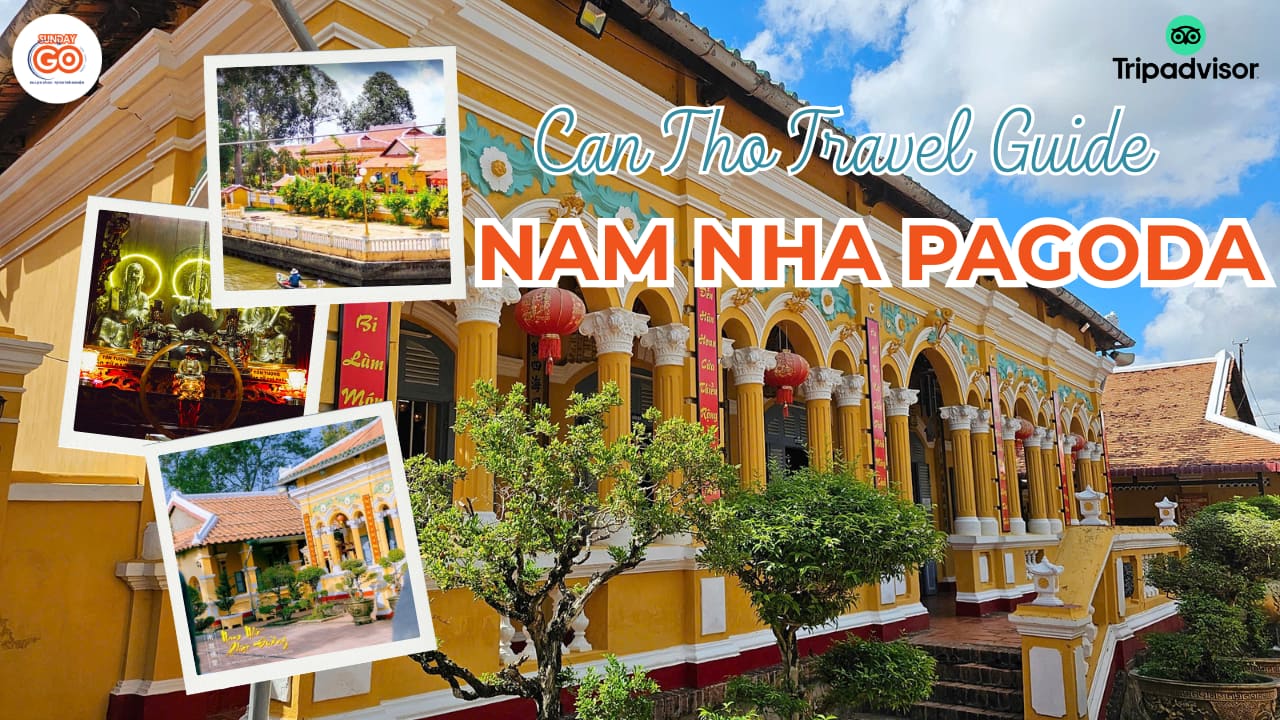
Imagine a place where the scent of ancient incense blends with the cool breeze of the Mekong River, where moss-covered roof tiles tell stories of a century-old struggle for independence. Welcome to Nam Nha Pagoda, one of Can Tho’s most treasured hidden gems.
Far more than just a religious site, this 130-year-old sanctuary is a living witness to Vietnam’s history, standing quietly along the banks of the Binh Thuy River. Whether you are a history buff, an architecture lover, or simply a traveler seeking peace amidst the bustling Mekong Delta, Nam Nha Pagoda offers a unique glimpse into the soul of Southern Vietnam.
At Sunday Go, with our 5+ years of experience serving international guests in the Mekong region, we believe that understanding the stories behind the stones makes every trip unforgettable. Let us guide you through the gates of this spiritual haven.
Nam Nha Pagoda at a Glance
Before diving into the rich history, here are the practical details you need to plan your visit.
- Full Name: Nam Nha Duong (Nam Nha Buddhist Hall) or Nam Nha Pagoda.
- Location: 612 Cach Mang Thang 8 Street, Bui Huu Nghia Ward, Binh Thuy District, Can Tho City.
- Entrance Fee: Free admission.
- Opening Hours: 7:00 AM – 11:00 AM and 2:00 PM – 7:00 PM daily.
- Best Time to Visit: Early morning (7:00–9:00 AM) for the best lighting and serene atmosphere.
- Distance: Approximately 6km from Can Tho city center (Ninh Kieu Wharf).
The Fascinating History: From Apothecary to Revolutionary Base
The Origins: A Riverfront Traditional Pharmacy
The story of Nam Nha Pagoda began in 1890, but not as a temple. It was originally established as a traditional herbal medicine shop named Nam Nha Duong by Mr. Nguyen Giac Nguyen. During this time, it served as a place to dispense medicine and treat the poor, laying the foundation for its deep connection with the local community.
In 1895, the shop was transformed into a place of worship following the Minh Su sect, a unique religious tradition that blends Buddhism, Taoism, and Confucianism. Over the years, particularly during a major reconstruction in 1917, the simple structure evolved into the grand architectural site we see today.
A Secret Fortress for Revolution
What makes Nam Nha Pagoda truly special is its dual identity. While monks chanted scriptures in the main hall, revolutionaries were plotting the path to independence in the back rooms.
During the early 20th century, the pagoda became the headquarters for the Dong Du Movement (Eastern Study Movement) in the Can Tho area. This movement, led by patriots like Phan Boi Chau, encouraged young Vietnamese to study abroad in Japan to gain knowledge for national liberation.
The pagoda hosted legendary figures such as Prince Cuong De and served as a secret meeting point for the “Special Committee of the Hau Giang Inter-province.” In recognition of its crucial role in the anti-French resistance, the Ministry of Culture, Sports and Tourism designated Nam Nha Pagoda as a National Historical Relic on January 25, 1991.
Architectural Highlights: Where East Meets West
Nam Nha Pagoda is a visual masterpiece that reflects the cultural crossroads of the Mekong Delta. Its architecture is a rare and harmonious fusion of traditional Vietnamese design, Chinese influences, and French colonial aesthetics.
The Grand Entrance
As you arrive, you are greeted by a large brick gate topped with green yin-yang tiles, a classic symbol of Vietnamese temples. The gate bears the three characters “Nam Nha Duong” and faces the Binh Thuy River, which was historically the main access route for visitors arriving by boat.
The Main Hall (Dieu Tri Buu Dien)
The heart of the pagoda is the Main Hall, a spacious five-compartment structure surrounded by corridors. The design features:
- French Colonial Facade: The exterior boasts distinctive yellow washes and arched doorways typical of the French period.
- Vietnamese-Chinese Roof: The roof is covered in yin-yang tiles and decorated with the “Lưỡng Long Tranh Châu” motif (two dragons fighting for a pearl), symbolizing power and prosperity.
- Sacred Interior: Inside, the layout strictly follows the Minh Su tradition. The central altar worships the three patriarchs: Buddha Shakyamuni (Buddhism), Confucius (Confucianism), and Laozi (Taoism), representing the harmony of the three religions.
The Garden Sanctuary
Surrounding the main buildings is a lush, spacious garden that feels like a fortress of tranquility. The courtyard is paved with traditional Chinese bricks and shaded by ancient trees, including pine and cypress trees that are over a century old. A large rockery (Hòn Non Bộ) standing over 2 meters high sits in the middle of the yard, adding to the feng shui balance of the site.
Spiritual Significance: The “Three Religions” Harmony
Nam Nha Pagoda belongs to the Minh Su sect, which emphasizes the unity of three major Eastern philosophies:
- Buddhism: For compassion and liberation.
- Taoism: For harmony with nature.
- Confucianism: For social order and morality.
This combination creates a unique spiritual atmosphere. Unlike some temples that are noisy with constant offerings, Nam Nha maintains a disciplined, meditative quietness. The name “Nam Nha” itself implies a vegetarian place of worship (“Nam” meaning south, “Nha” implying a refined, vegetarian hall).
Visitor Tips for a Perfect Experience
To make the most of your visit to this sacred site, here are some expert tips from our team at Sunday Go.
Dress Code and Etiquette
- Clothing: As this is a functioning place of worship, please dress modestly. Wear shirts that cover your shoulders and pants/skirts that cover your knees.
- Behavior: Speak softly and avoid loud laughter. Remove your shoes before entering the Main Hall.
- Photography: You are welcome to take photos of the architecture and gardens. However, refrain from using flash inside the prayer halls and always ask for permission before photographing the monks or nuns.
Nearby Attractions: Complete Your Binh Thuy Itinerary
Nam Nha Pagoda is located in the Binh Thuy district, a goldmine for heritage tourism. You can easily combine your visit with these nearby famous spots:
- Binh Thuy Ancient House: Just a few hundred meters away, this famous house featured in the movie “The Lover” is a must-see for its exquisite French-Vietnamese architecture.
- Binh Thuy Communal House (Dinh Binh Thuy): A magnificent temple dedicated to local guardian spirits, known for its intricate wood carvings.
- Son Islet: Take a short boat ride to this community tourism island to experience fruit orchards and fish farms.
How to Get There
Getting to Nam Nha Pagoda is straightforward:
- By Motorbike/Taxi: From Ninh Kieu Wharf, cross the Nguyen Trai bridge and follow Cach Mang Thang 8 Street for about 5-6km. The pagoda is located near the foot of Binh Thuy Bridge. Look for a large gate on the right side if you are heading away from the city center.
- By Boat: For a truly authentic experience, you can rent a boat to travel along the Can Tho River to the Binh Thuy River, docking right in front of the pagoda, just as visitors did a century ago.
Conclusion
Nam Nha Pagoda is more than just a destination; it is a quiet keeper of Can Tho’s soul. Standing under its ancient trees, you can almost hear the whispers of history—of healers treating the sick and patriots fighting for freedom. It is a place that reminds us that travel is not just about seeing new places, but about feeling the spirit of the land.
