

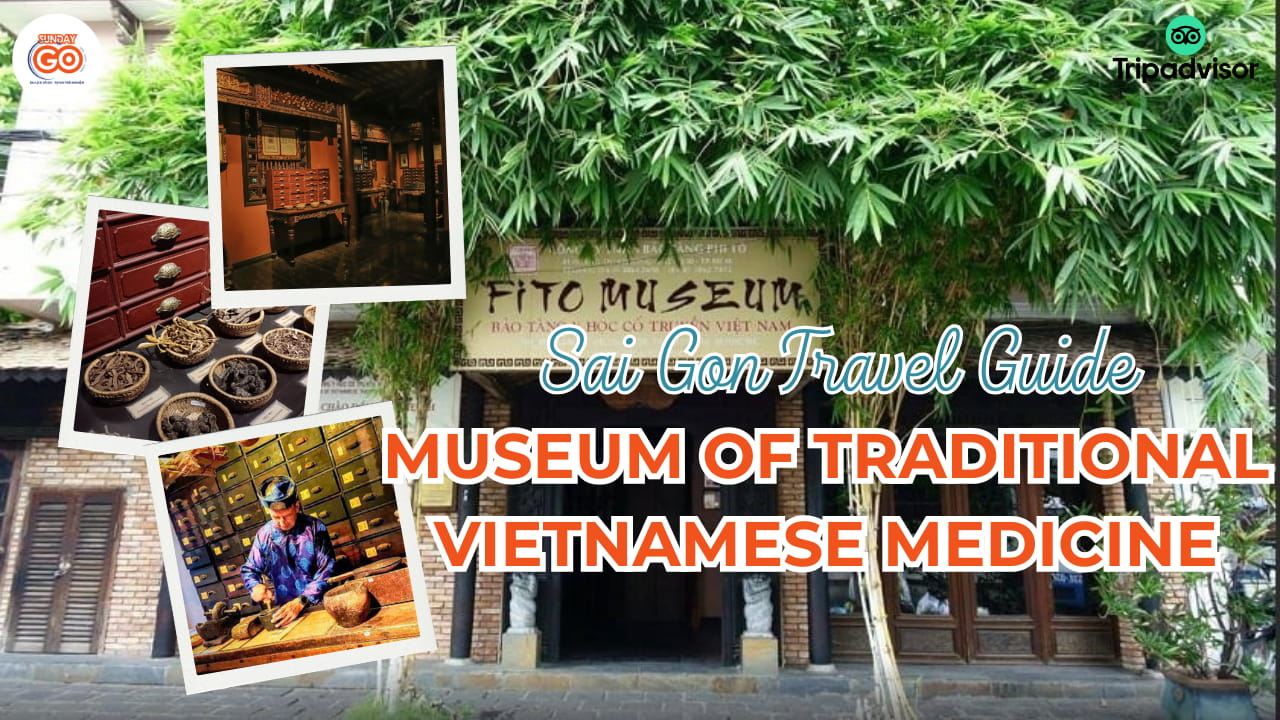
Imagine stepping off the busy streets of Saigon and walking into a space that smells of cinnamon, licorice, and aged wood. This isn’t just a museum; it is a sanctuary.
While most travelers flock to the Ho Chi Minh City Museum of Fine Arts for its French colonial beauty, there is another architectural masterpiece hidden in District 10, Saigon that tells a deeper story. Welcome to the Museum of Traditional Vietnamese Medicine, commonly known as the Fito Museum.
With over 5 years of experience guiding international guests through Vietnam’s cultural landscape, Sunday Go considers this one of the city’s true “hidden gems.” If you love history, unique architecture, and peaceful atmospheres, this guide is for you.
What is the Fito Museum of Traditional Vietnamese Medicine?
The Fito Museum of Traditional Vietnamese Medicine is the first private museum in Vietnam dedicated to the ancient art of healing. Unlike standard history museums, this building feels like a living home.
Opened in 2007, the museum houses a massive collection of over 3,000 artifacts dating back to the Stone Age. It celebrates the philosophy of “Nam Y” (Southern Medicine), emphasizing the use of local tropical herbs to cure illness. It stands as a tribute to Vietnam’s two medical saints: Tue Tinh and Le Huu Trac (Hai Thuong Lan Ong).
For art lovers who enjoyed the Ho Chi Minh City Museum of Fine Arts, the Fito Museum offers a different kind of visual feast. Instead of paintings, you will find intricate wood carvings and traditional mosaic art that rival any gallery in the city.
A Floor-by-Floor Guide: What to See
The museum has six floors (including a ground floor and elevator access), and exploring it feels like a treasure hunt.
The Ground Floor: The Introduction
Your journey begins with a short documentary called “A Century of Health Experiences.” It provides essential context about the history of traditional medicine in Vietnam. Don’t skip this—it helps you understand the tools you will see later.
Floors 2 & 3: The Heart of the Collection
This is where the magic happens. You will find:
- The Altar of Medicine: A solemn, beautifully carved wooden altar dedicated to the founders of Vietnamese medicine.
- The Cham Tower Replica: A stunning architectural feature built right inside the museum, showcasing the diversity of Vietnam’s cultural history.
- Ancient Tools: Display cases filled with ceramic teapots, wine jars, and scales used by royal physicians centuries ago.
The Interactive Pharmacy
One of the best Museum of traditional Vietnamese medicine photos you can take is in the mock pharmacy. Here, you can dress up in a traditional Ao Dai and pose behind the counter as if you are a physician prescribing herbs. You can even try grinding herbs with a traditional mortar and pestle!
The Rooftop
Take the elevator to the top for a panoramic view of District 10. You will also see the “Tree of Traditional Medicine,” a magnificent wood carving listing the names of 100 famous royal doctors and authors.
Why This Museum is a Photographer’s Paradise
If you are searching for Museum of traditional Vietnamese medicine photos, you will not be disappointed.
The building itself is a work of art. It was constructed using discarded wooden frames from old houses in the Red River Delta. The warm lighting, dark wood panels, and intricate window frames create a moody, nostalgic atmosphere that is perfect for photography.
Museum of Traditional Vietnamese Medicine Reviews: Is it Worth It?
Based on hundreds of Museum of traditional Vietnamese medicine reviews and our own client feedback, here is the honest breakdown:
The Pros:
- Peaceful Atmosphere: It is far quieter than the War Remnants Museum or the Independence Palace.
- Free Tea: The tour ends with a complimentary cup of herbal tea (usually artichoke or reishi mushroom tea), which is soothing and delicious.
- English Support: Most exhibits have clear English descriptions.
The Cons:
- Location: It is located in District 10, about 20-30 minutes by car from the tourist center (District 1).
- Price: The ticket price is higher than public museums.
Is it worth the price?
Yes. At 180,000 VND (approx. $7 USD), it is pricier than the 30,000 VND ticket at the Fine Arts Museum, but the level of detail, the private collection, and the complimentary tea make it a premium experience.
Practical Information (2026 Updates)
- Official Name: Fito Museum (Museum of Traditional Vietnamese Medicine)
- Address: 41 Hoang Du Khuong, District 10, Ho Chi Minh City.
- Opening Hours: 8:30 AM – 5:00 PM (Monday to Sunday).
- Entrance Fee (2026):
- Adults: 180,000 VND
- Children (under 1.2m): 90,000 VND
How to Plan Your Visit with Sunday Go
Getting to District 10 can be tricky for first-time visitors due to the complex one-way street systems. This is where Sunday Go can help make your trip seamless.
Private Car Transfer
Don’t worry about Grab cancellations or taxi scams. Sunday Go offers private car rentals with professional drivers who know exactly where the museum is tucked away. Relax in air-conditioned comfort—perfect for families or travelers aged 40-60 who prefer a stress-free experience.
The “Culture & Cuisine” Combo
Make the most of your trip to District 10! We recommend combining your museum visit with a local food tour. After exploring the Museum of traditional medicine, let us take you to the nearby Ho Thi Ky Flower Market (just 10 minutes away) to try the famous Cambodian sweet soup (Che Campuchia) or snail dishes.
Ticket Services
Skip the line. We can arrange your entrance tickets in advance as part of your tour package.
Conclusion
The Museum of Traditional Vietnamese Medicine is more than just a display of old tools; it is a journey into the spiritual and physical well-being of the Vietnamese people. It offers a quiet, artistic alternative to the busy city center, much like a rustic cousin to the elegant Ho Chi Minh City Museum of Fine Arts.
Whether you are a history buff, a photographer, or simply someone looking for a unique travel experience, the Fito Museum is a must-visit.
