

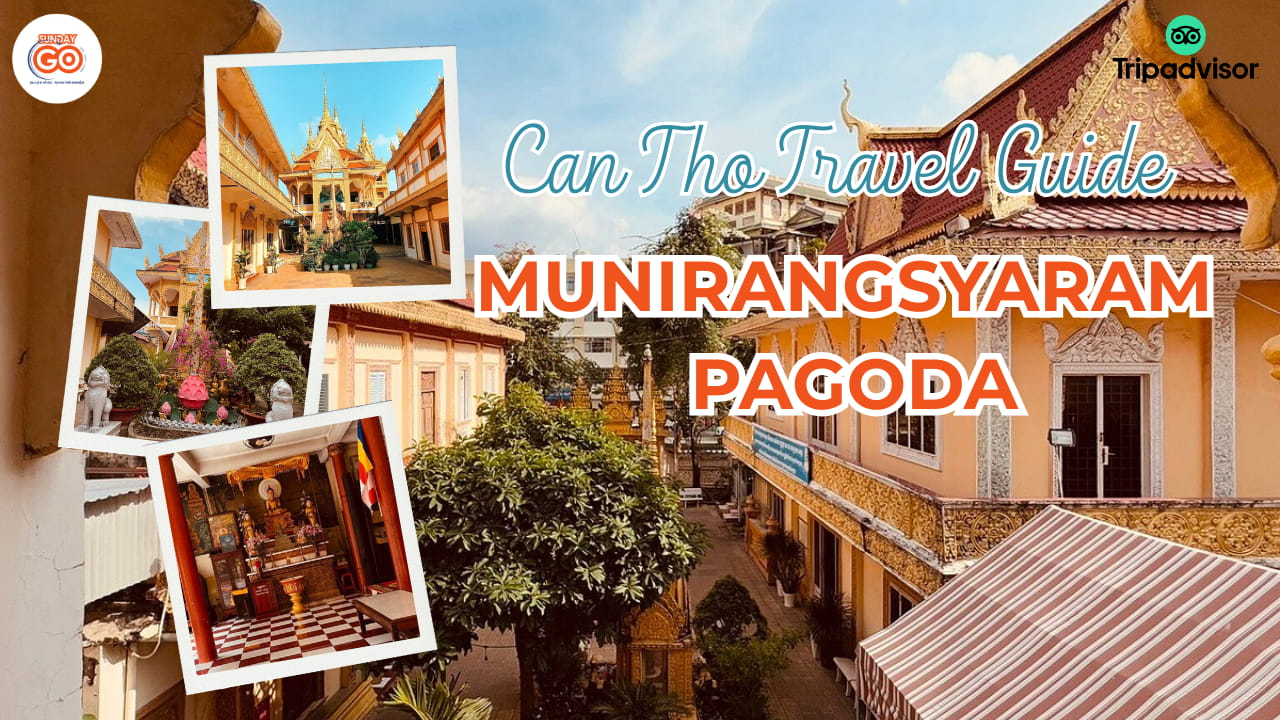
Can Tho is famous for the bustling Cai Rang Floating Market and endless fruit orchards, but there is a hidden gem right in the city center that many travelers miss. It is the Munirangsyaram Pagoda (often called Munir Ansay), a stunning flash of gold amidst the busy streets.
At Sunday Go, we have spent over 5 years guiding international guests through the Mekong Delta. We often see visitors surprised by the sudden architectural shift from Vietnamese tube houses to this Angkor-style masterpiece. Whether you are a history buff or just looking for a peaceful escape from the heat, this pagoda is a must-visit destination.
What is Munirangsyaram Pagoda?
Munirangsyaram Pagoda is the largest and oldest Khmer Theravada Buddhist temple in Can Tho City. The name “Munir Ansay” carries a beautiful meaning: it translates roughly to “Precious Gem” or “Illuminated One,” symbolizing wisdom and enlightenment.
Unlike the Mahayana Buddhist temples you might see in Northern Vietnam (which often feature Chinese influence), Munir Ansay is distinctly Khmer. It serves as a spiritual center for the Khmer Krom ethnic minority living in the Mekong Delta.
Quick Visitor Facts
If you are planning a visit, here are the essential details:
- Address: 36 Hoa Binh Avenue, Ninh Kieu District, Can Tho City
- Entrance Fee: Free (Donations are welcome)
- Opening Hours: Approx. 8:00 AM – 6:00 PM (Daily)
- Best Time to Visit: 4:00 PM – 5:00 PM (Golden hour for photos & cooler weather)
- Distance: Walking distance from Ninh Kieu Wharf (City Center)
The History: From Bamboo to Gold
When you stand before the glittering golden gate today, it is hard to imagine that this temple started as a humble structure made of bamboo and nipa palm leaves.
The history of Munirangsyaram Pagoda reflects the resilience of the local community:
- 1948: The pagoda was originally established using simple materials by the Khmer community.
- 1954: The iconic main gate, modeled after the famous Angkor Wat architecture, was constructed.
- 1964: The construction of the Main Hall (Chanh Dien) began. This is the impressive two-story structure you see today.
- 1988: The inauguration of the completed Main Hall took place after years of interruption due to war.
For tourists interested in Munirangsyaram pagoda history, this site is not just a building; it is a living timeline of the Khmer people’s presence in the Mekong Delta.
Architecture: A Glimpse of Angkor in Vietnam
The architectural style of Munir Ansay is its biggest draw. As you approach from Hoa Binh Avenue, you will immediately notice the “Angkor” influence. The use of Gold (representing wisdom) and Red (representing fortune) makes the temple shine brilliantly under the tropical sun.
The Three Jewels Gate
The entrance gate is built in the shape of a tower modeled after the “Tam Bao” (Three Jewels) architecture. The three small towers on top represent the Buddha, the Dharma (his teachings), and the Sangha (the community of monks).
The Main Hall (Chanh Dien)
The sanctuary is elevated high off the ground. Inside, the decor is breathtaking:
- Shakyamuni Buddha: A massive statue of the Buddha sits on a lotus throne, facing East. In Theravada tradition, facing East symbolizes the direction of enlightenment.
- Wall Reliefs: The walls are not just painted; they are adorned with reliefs depicting the life of the Buddha and scenes from the Reamker (the Khmer version of the Ramayana epic).
- The Keynor: Look closely at the columns and roof beams. You will see statues of the Keynor (Kinnara)—mythical creatures with a human face and a bird’s body. In Khmer culture, they are guardians of beauty and art.
Visitor Guide: Etiquette & Tips
We often get asked by our international guests, “Is it okay for me to go inside?” The answer is yes! The monks are very welcoming. However, to show respect, you should follow these simple rules.
Dress Code is Key
This is a functioning place of worship.
- Shoulders: Must be covered. No tank tops or spaghetti straps.
- Knees: Shorts or skirts should go below the knee.
Shoe Etiquette
You do not need to take off your shoes at the street gate. However, you must remove your shoes before climbing the steps into the Main Hall or entering any of the prayer rooms. Look for the pile of shoes left by other locals as a cue.
Photography
You are generally allowed to take photos of the architecture. The intricate gold details make for amazing Instagram shots.
- Restriction: Avoid using flash inside the prayer hall.
- Monks: If you see monks, ask for permission before taking a close-up photo. Many young monks are friendly and may even want to practice English with you!
Cultural Festivals at Munir Ansay
If you can time your trip with Sunday Go during these festivals, you will see the pagoda come alive with music, lights, and traditional ceremonies.
- Chol Chnam Thmay (Khmer New Year): Usually in mid-April. This is the biggest celebration, featuring water-splashing rituals to wash away bad luck.
- Ok Om Bok (Moon Worship): Occurs in October or November. This festival is famous for the “Ngo” boat races on the river and the release of sky lanterns.
- Donta Festival: Held in August or September, this is a time to honor ancestors, similar to the “Day of the Dead” traditions in other cultures.
FAQ: Common Questions About Munir Ansay
Q: Is Munirangsyaram Pagoda wheelchair accessible?
A: The ground courtyard is accessible, but the Main Hall is located on the second floor and requires climbing stairs.
Q: Can I speak to the monks?
A: Yes. Many young monks study at the pagoda and are eager to practice English. A polite “Hello” is a great way to start.
Q: How is this different from the Ong Temple nearby?
A: Great question! Ong Temple is Chinese (Taoist/folk religion) and features red lanterns and spiral incense coils. Munir Ansay is Khmer (Buddhist) and features golden stupas and yellow robes. Visiting both gives you a perfect picture of Can Tho’s diversity.
Conclusion
Munirangsyaram Pagoda is more than just a tourist attraction; it is the spiritual heartbeat of the Khmer community in Can Tho. Its golden spires and peaceful atmosphere offer a unique contrast to the bustling floating markets nearby.
Whether you are admiring the Angkor-style architecture or simply enjoying a moment of silence in the city center, a visit here is a highlight of any Mekong Delta trip.
