

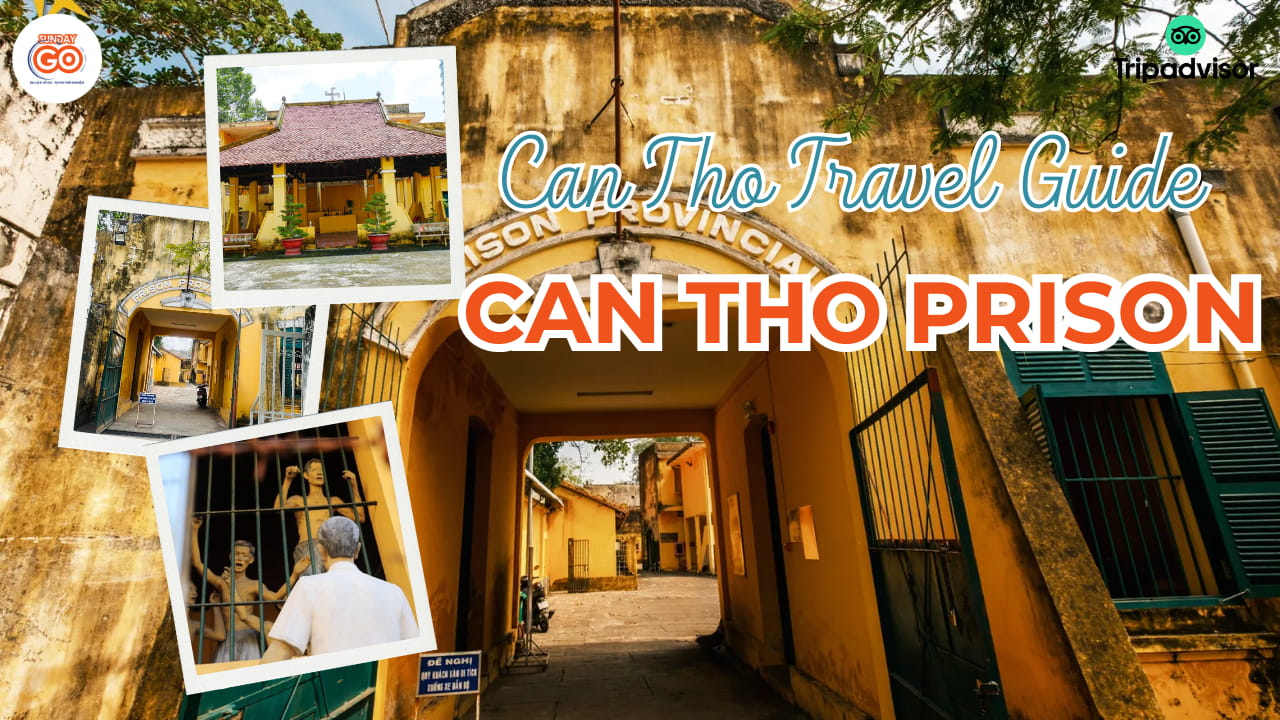
The Silence Behind the Walls: Why Visit Can Tho Prison?
While Can Tho is famous for the Cai Rang Floating Market, missing the Grand Prison (known locally as Khám Lớn Cần Thơ) means missing a crucial chapter of the region’s story.
This site is a “Red Address“—a term used in Vietnam for revolutionary historical sites. It stands as a testament to the indomitable will of the patriots who were held here. If you are searching for the Can Tho prison location, you are likely looking for a deeper connection to the culture beyond the standard tourist trail. It provides a sobering, educational balance to your Mekong Delta itinerary.
A Timeline of Resilience: From Provincial Jail to National Monument
To truly appreciate what you are seeing, you need to understand the layers of history beneath your feet. The site has evolved through two major wars.
The French Colonial Era: Prison Provinciale (1878-1945)
Construction began in 1878 and was completed in 1886. In the colonial records, this site was designated as the Prison Provinciale Can Tho prison. The French colonial administration built it specifically to detain patriots and revolutionaries from Can Tho and neighboring provinces like Soc Trang and Bac Lieu.
During this time, the prison was a tool of fear. The colonial regime used it to suppress the rising movements against their rule.
The American Era: Expansion and Renaming
After the Geneva Accords in 1954, the prison changed hands. The Saigon regime (backed by the US) renamed it the “Phong Dinh Reeducation Center.” During the Vietnam War, the prison was expanded to hold even more prisoners. It wasn’t until the liberation of the South in 1975 that the prison doors were finally opened, ending nearly a century of operation.
Architecture of the “Grand Prison”
The Can Tho grand prison is an imposing structure, even today. The architecture was designed with one purpose: maximum security and psychological intimidation.
The complex covers nearly 3,700 square meters. It is isolated from the outside world by thick walls (5 meters high) topped with rusted barbed wire and jagged glass shards. Four watchtowers stand at the corners, equipped with searchlights that once monitored every movement in the yard.
The Layout
- Collective Cells: There are 21 large detention rooms. These were often overcrowded, with prisoners shackled in rows.
- Solitary Confinement: Known as the “dark cells,” these windowless rooms were used to punish those who led protests or refused to cooperate.
- Special Zones: There is a kitchen, a dispensary, and surprisingly, a shrine and a church. These religious spaces were often used to manipulate the prisoners’ psychological state rather than for genuine worship.
Visual Walkthrough: What You Will See Inside
Entering the prison can be an emotional experience. As you walk through the iron gates, the temperature seems to drop, shadowed by the high walls and ancient almond trees.
Realistic Exhibits
To help visitors visualize the past, the museum has installed life-sized mannequins depicting scenes of daily life and torture.
- The Interrogation Room: You will see depictions of the brutal tactics used to extract information.
- The Living Quarters: Statues show prisoners shackled by their ankles, eating and sleeping in the same cramped space.
Note: Some of these exhibits are graphic. If you are traveling with young children, please be mindful.
The Gallery of Heroes
One of the most moving sections is the photo gallery. Here, you can view historic Can Tho prison photos that capture the faces of the former inmates—many of whom were young students and intellectuals. Their eyes stare back at you from black-and-white portraits, reminding us that these were real people with families and dreams.
You will also see artifacts like personal bowls, tattered clothing, and poetry carved secretly onto the walls—proof that even in a historic Can Tho prison environment, creativity and hope could not be extinguished.
Visitor Guide: Logistics & Planning
Sunday Go wants to ensure your visit is smooth. Here are the practical details you need.
- Address: No. 8, Ngo Gia Tu Street, Tan An Ward, Ninh Kieu District, Can Tho City.
- Opening Hours:
- Morning: 8:00 AM – 11:00 AM
- Afternoon: 2:00 PM – 5:00 PM
- Open daily, including weekends and holidays.
- Entrance Fee: Generally free for visitors (you may need to register at the gate).
- Dress Code: Please dress modestly (cover shoulders and knees) out of respect for the memorial site.
Best Time to Visit
The Mekong Delta can get very hot. We recommend visiting right at 8:30 AM or 3:30 PM. This allows you to explore the outdoor courtyards without the midday sun beating down on you.
How to Integrate Can Tho Prison into Your Itinerary
At Sunday Go, we specialize in creating seamless travel experiences. A visit to the prison usually takes about 45 to 60 minutes, making it easy to combine with other famous spots.
Recommended 1-Day “Culture & History” Combo
- 05:30 AM: Depart for Cai Rang Floating Market by boat to see the sunrise and trade.
- 07:30 AM: Visit a local noodle factory (Hủ Tiếu).
- 09:30 AM: Visit the Can Tho Grand Prison to cool down and learn about history.
- 11:00 AM: Visit the Binh Thuy Ancient House (featured in the movie “The Lover”).
- 12:30 PM: Enjoy a traditional lunch arranged by Sunday Go.
Services Sunday Go Provides
- Private Car Rental: Moving between the floating market pier and the prison is best done by private car or AC van to avoid the heat.
- Knowledgeable Guides: Most signage in the prison is in Vietnamese. A Sunday Go guide will translate the stories, the poetry, and the history for you, ensuring you don’t miss the context.
- Ticket & Visa Assistance: We handle all logistics so you can focus on the experience.
Conclusion
The Can Tho prison complex is more than just a tourist attraction; it is a bridge to the past. Walking through its corridors offers a profound lesson on the price of freedom and peace. It transforms a trip to Can Tho from a simple sightseeing tour into a meaningful journey.
