

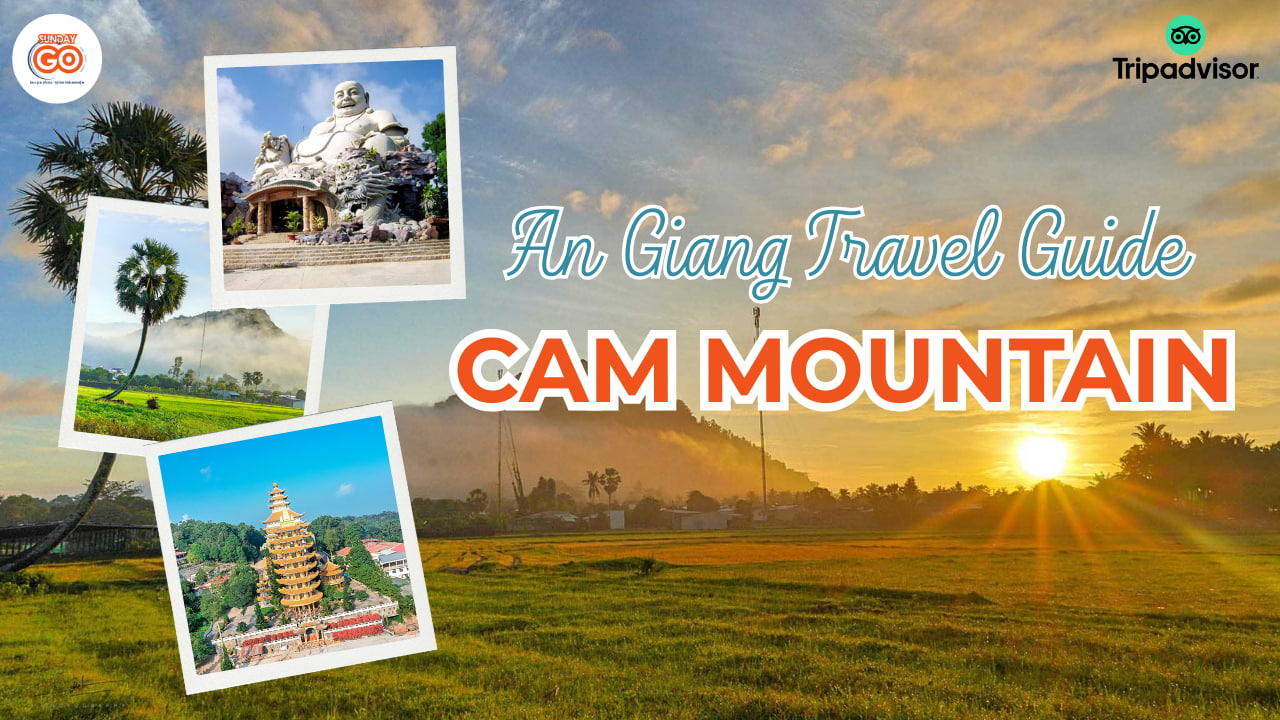
Imagine standing 705 meters above sea level, surrounded by swirling white clouds, with the vast green rice fields of the Mekong Delta stretching out beneath you like a giant silk map. Welcome to Cam Mountain (Thiên Cấm Sơn), the majestic “Roof of the Mekong Delta.”
Located in the heart of the mysterious Seven Mountains (Thất Sơn) region in An Giang province, this destination is more than just a scenic spot; it is a spiritual masterpiece. Whether you are a pilgrim seeking peace or an adventurer looking for a challenge, this mountain offers a unique escape from the heat and noise of the city.
With over 5 years of experience guiding international guests through the hidden gems of An Giang, Sunday Go is here to bridge the gap between local legends and your travel plans. In this guide, we will explore everything you need to know for a safe and unforgettable trip in 2026.
Why is it called “Forbidden Mountain”?
Before we pack our bags, we must understand the name. Why is it called Forbidden Mountain? The local name, Thien Cam Son, holds deep historical and spiritual meaning.
There are two famous legends that explain this mysterious title:
- The Royal Hideout: Historical accounts suggest that Nguyen Anh (who later became King Gia Long) once sought refuge on this mountain while fleeing from the Tay Son rebels. To protect his location, he ordered his soldiers to spread rumors that the mountain was filled with monsters and evil spirits, effectively “forbidding” commoners from entering.
- The Spiritual Warning: Another popular belief is that the mountain was once home to fierce wild beasts and powerful mountain deities. Locals were “forbidden” to trespass to keep the sanctity of the peak pure and to avoid the dangers lurking in the dense forest.
Today, the “forbidden” aspect has faded, replaced by welcoming gates, but the aura of mystery remains, making it a top destination for cultural tourism in Vietnam.
Location & How to Get There
Cam Mountain Vietnam is located in An Hao Commune, Tinh Bien District, An Giang Province. It sits roughly 250km from Ho Chi Minh City (HCMC) and about 90km from Can Tho City.
Getting here can be an adventure in itself. Here are your best options:
By Public Bus
You can catch a bus from the Mien Tay Bus Station in HCMC to Long Xuyen or Chau Doc. From there, you will need to switch to a local bus or “xe om” (motorbike taxi) to reach the mountain base.
- Pros: Cheap.
- Cons: Confusing for non-Vietnamese speakers; multiple transfers required.
By Motorbike
For the thrill-seekers, riding through the Mekong Delta roads offers incredible views. The route along Provincial Road 948 is scenic, lined with Palmyra palm trees.
Note: Ensure you have a valid international license and a good Cam Mountain map on your phone.
The Sunday Go Solution: Private Transfer
The most stress-free way for international tourists is a private car. The roads in An Giang can be narrow and busy. Sunday Go provides private transfers directly from your hotel in HCMC or Can Tho to the cable car station. You get air-conditioning, a safe driver, and no navigation headaches.
Exploring Cam Mountain: Cable Car vs. Climbing
Once you arrive at the base, you have two ways to conquer the peak. Your choice depends on your fitness level and travel style.
Option 1: The Cable Car (Relaxed & Scenic)
This is the most popular choice for families and seniors. The cable car system is modern and safe, offering a 15-minute ride with breathtaking aerial views of the forest and the reservoirs below.
- Best for: Photography, families, and saving time.
Option 2: Cam Mountain Climbing (Adventure)
For those who want to earn their view, Cam Mountain climbing is a rewarding challenge.
- The Route: The trek is not technical rock climbing but rather a steep hike along paved paths and jungle trails.
- Duration: It takes an average person 3 to 4 hours to reach the summit.
- Safety Tip: The paths can branch off unexpectedly. While solo trekking is possible, it is easy to get lost or dehydrated.
2026 Ticket Prices & Opening Hours
Budgeting is easier when you have the right numbers. Below is the estimated pricing for the Cam Mountain Tourist Area for 2026. Please note that prices may fluctuate slightly during Lunar New Year (Tet) or public holidays.
| Service | Adult | Child (Under 1,3m) |
| Entrance Ticket | ~20,000 VND | ~10,000 VND |
| Round Trip Cable Car | ~220,000 - 250,000 VND | ~120,000 |
| One-way Cable Car | ~160,000 VND | ~80,000 VND |
Top 5 Must-Visit Spots on the Mountain
Once you reach the top, the air becomes cooler (similar to Dalat), and the scenery transforms. Here are the key entities you must see:
- The Big Buddha (Maitreya Buddha): Standing 33.6 meters tall, this is recognized as the largest Maitreya Buddha statue on a mountain peak in Asia. The statue’s smiling face symbolizes happiness and prosperity.
- Van Linh Pagoda: Modeled after traditional oriental architecture, this pagoda features a beautiful 9-story stupa rising from the forest canopy.
- Thuy Liem Lake: A peaceful lake situated right in the center of the mountain plateau. It creates a zen atmosphere and is perfect for a relaxing walk.
- Bo Hong Peak: This is the legendary summit—the highest point of the mountain. It is the best spot for “cloud hunting” early in the morning.
- Vo Thien Tue: A quieter, more ancient worship site often visited by pilgrims looking for deep meditation.
Food & Accommodation: The “Pancake” Experience
What to Eat:
You cannot visit the Seven Mountains region without trying Banh Xeo (Vietnamese sizzling pancake). The version here is special because it uses wild mountain vegetables (Rau Nui) that you can only find at this altitude. The crispiness of the pancake combined with the fresh, aromatic herbs is a culinary delight.
Where to Stay:
- On the Mountain: Accommodation is limited to simple guesthouses (Nha Tro) or camping.
- Nearby: For comfort, many tourists stay at hotels in Chau Doc city or the Victoria Nui Sam Lodge and take a day trip here.
- Sunday Go Tip: If you want to experience a sunrise on the peak, ask us about our safe Camping & Glamping packages.
FAQ: Essential Tips for International Tourists
Q: Is Cam Mountain safe for foreigners?
A: Yes, it is very safe. However, the language barrier can be tricky as few locals speak fluent English. Having a translator or guide is helpful.
Q: When is the best time to visit?
A: The best time is during the dry season (December to April). The views are clear, and the trekking paths are not slippery.
Q: Do I need a permit to climb?
A: No special permit is required, just your entrance ticket.
Conclusion: Ready to Conquer the Forbidden Mountain?
Cam Mountain is more than just a destination; it’s a journey into the spiritual heart of the Mekong Delta. From the towering Maitreya Buddha to the misty trails of Bo Hong Peak, this place offers a travel experience that is both grounding and exhilarating.
Don’t let the logistics of the “Forbidden Mountain” stop you. Whether you need a detailed Cam Mountain map, a reliable private driver, or a fully supported trekking adventure, Sunday Go is your trusted local companion. We handle the details so you can focus on the magic.
