

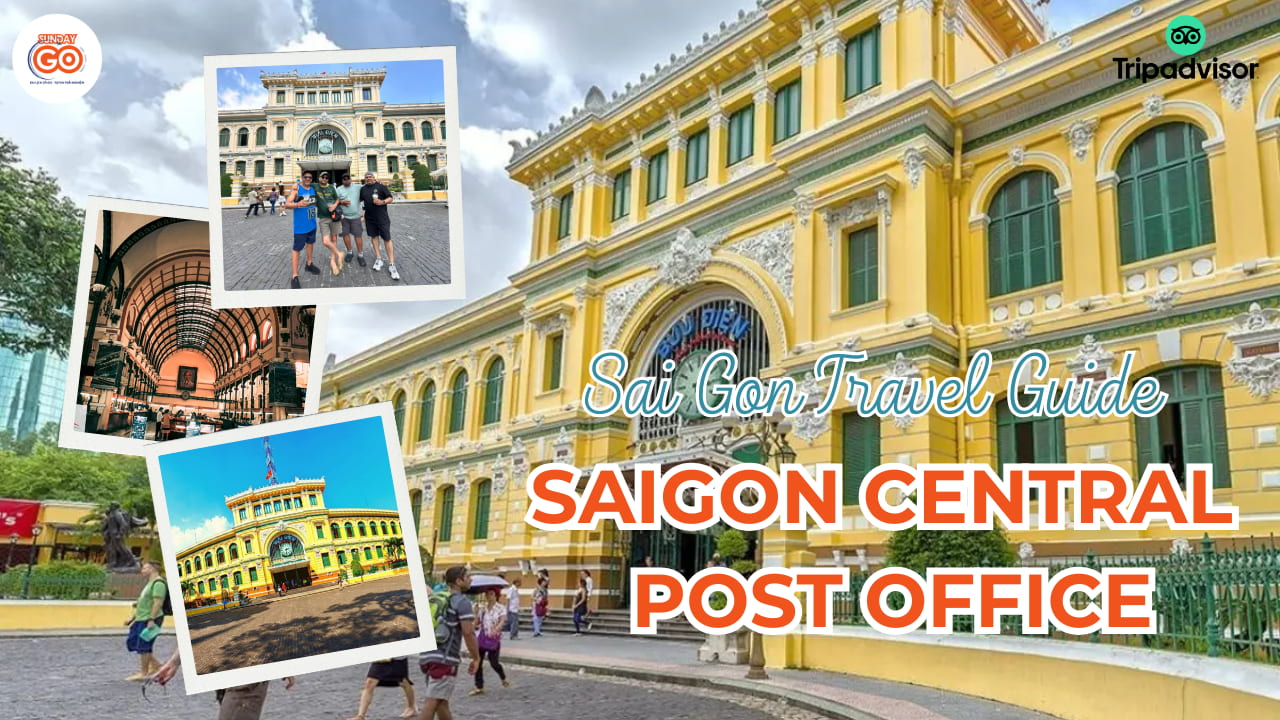
Saigon Central Post Office Vietnam travel gudie
The Saigon Central Post Office is one of Ho Chi Minh City’s most famous French-era landmarks, set right next to the Saigon Notre-Dame Basilica in District 1. It’s still a working post office, but it also feels like a small museum where you can admire colonial architecture, historic maps, and the city’s everyday life in one stop.
If you searched “post office Saigon” or “Saigon Central Post Office Vietnam,” this guide gives you the exact basics (address, opening hours, map tips), what to do inside, and how to plan it into a smooth half-day route.
Quick visitor information
Saigon Central Post Office address (District 1): 2 Cong Xa Paris Street (Paris Commune Square area), Ben Nghe Ward, District 1, Ho Chi Minh City, Vietnam. The building sits at Paris Commune Square and is right next to Saigon Notre-Dame Basilica (Notre Dame Cathedral of Saigon).
Saigon Central Post Office opening hours: Many official tourism guides list it as open daily, typically around 7:00 AM–7:00 PM on weekdays, with shorter hours on the weekend (commonly 7:00 AM–6:00 PM Saturday and 8:00 AM–6:00 PM Sunday). Because hours can change for holidays or special events, it’s smart to confirm on Google Maps right before you go (search “Saigon Central Post Office map”).
Entrance fee: Most travelers visit for free since it’s a public post office and a tourist attraction.
How long to spend: Plan 30–60 minutes if you want photos, a quick look at the interior details, and time to buy and send postcards.
Best time for Saigon Central Post Office photos: Go early in the morning for softer light and fewer tour groups, especially if you want clean wide shots down the main hall.
History and architecture
The Saigon Central Post Office was built in the late 19th century when Vietnam was part of French Indochina. Construction took place from 1886 to 1891.
The building was designed by Marie-Alfred (Alfred) Foulhoux, although many people mistakenly credit Gustave Eiffel. Architecturally, it blends Gothic and Renaissance elements with classic French influences, which is why it stands out even in a city full of colonial-era buildings.
Inside, look for the long barrel-vaulted hall (the big arched ceiling) with green-painted wrought iron details and a tiled floor that makes the space feel grand and bright. At the far end, you’ll see a mosaic portrait of Ho Chi Minh, which has become one of the most recognizable photo backdrops in the building.
A highlight many visitors miss is the pair of historic wall maps painted in 1892, including one showing telegraph lines in Southern Vietnam and Cambodia and another showing Saigon and its surroundings. These maps are a strong reminder that this place was built for real communication services—telegraph, mail, and public contact—long before it became a must-see stop for tourists.
What to do inside (and what to notice)
If you want the classic experience, buy a postcard, write a short message, and mail it from the counter—sending something from a historic building feels more special than dropping it in a normal mailbox. The building is also a great place to slow down for a moment, because you can see local people using postal services while travelers walk around with cameras.
Here are the most worthwhile things to do, in a simple order that works well for first-time visitors:
- Take your “main hall” photo first (stand near the entrance and shoot straight down the center aisle toward the Ho Chi Minh mosaic).
- Walk to both sides to find the two 1892 maps and get close-up detail shots of the lettering and lines.
- Look up: the arched ceiling and iron framework are a big part of what makes the interior feel like a European train station from the same era.
- Look for the commemorative plaques on the exterior wall that reference key figures in communications science, including Morse, Ampere, Volta, Ohm, and Faraday.
- If you’re curious about a unique local story, Wikipedia notes that Dương Văn Ngộ—known as the last public letter writer in Vietnam—worked here from 1990 to 2021.
Saigon Central Post Office directory tip (practical, not complicated): Think of the space as two experiences in one building—(1) the central hall for photos and architecture, and (2) the service counters for stamps, mailing, and help. If you need a specific service (international mail, parcel questions, or stamp help), go straight to the main counter and ask first, then enjoy the sightseeing after.
Saigon Central Post Office reviews (how to use them well): Reviews are most useful for timing and crowd expectations, not for deciding whether the building is “worth it,” because it’s a fast, central, iconic stop. Trip planning works best when you combine reviews with a clear route (Post Office → Cathedral area → Book Street/Palace), so you don’t waste time backtracking.
Location, map, and how to get there
The Saigon Central Post Office sits in the heart of District 1, which makes it easy to reach from most central hotels and the city’s major attractions. It’s located by Paris Commune Square and next to Saigon Notre-Dame Basilica, so even first-time visitors can spot the area quickly.
Saigon Central Post Office map (easy method):
- Open Google Maps and search “Saigon Central Post Office.”
- Save it to your list, then also save “Saigon Notre-Dame Basilica” so you can navigate the whole block easily.
Getting there by taxi / ride-hailing (Grab, Be)
Vietnam Airlines’ travel guide specifically recommends taxis or ride-hailing apps like Grab and Be as a comfortable, simple option. From Tan Son Nhat Airport, Vietnam Airlines lists an estimated ride cost of about 120,000–180,000 VND (USD 5–8), depending on traffic and pickup conditions.
- From other District 1 spots: Vietnam Airlines also lists a typical short ride from Ben Thanh Market at about 30,000–50,000 VND (USD 1.5–2.5), which is useful when it’s hot or rainy.
- Walking: If you already plan to visit the cathedral area, walking is ideal because the post office and basilica are essentially next door. Walking also helps if you want better “Saigon central post office photos,” since you can approach slowly and choose angles without the pressure of a driver waiting.
Accessibility notes (simple expectations): This is a popular tourist stop, so it can feel crowded at peak hours, especially around midday and weekends. If you prefer quieter photos, come early and keep your visit short and focused: take the main hall photo, see the maps, then move on.
How Sunday Go can help (without making your day complicated): If you prefer a guide and a ready schedule, Sunday Go can arrange a city tour that includes the Saigon Central Post Office plus other District 1 classics, along with add-ons like airport transfers, hotel/resort bookings, and tickets that match your travel plan. This is especially helpful if you’re short on time, traveling as a couple/family, or want a smooth day with no confusing logistics.
The Saigon Central Post Office is a rare place where you can take beautiful travel photos, learn a bit of Saigon’s French-era history, and still do something real—like sending a postcard home—inside a working landmark. If you want Ho Chi Minh City to feel “real” from your first day, put this stop early in your itinerary, then let the surrounding District 1 streets lead you to your next discovery.
