
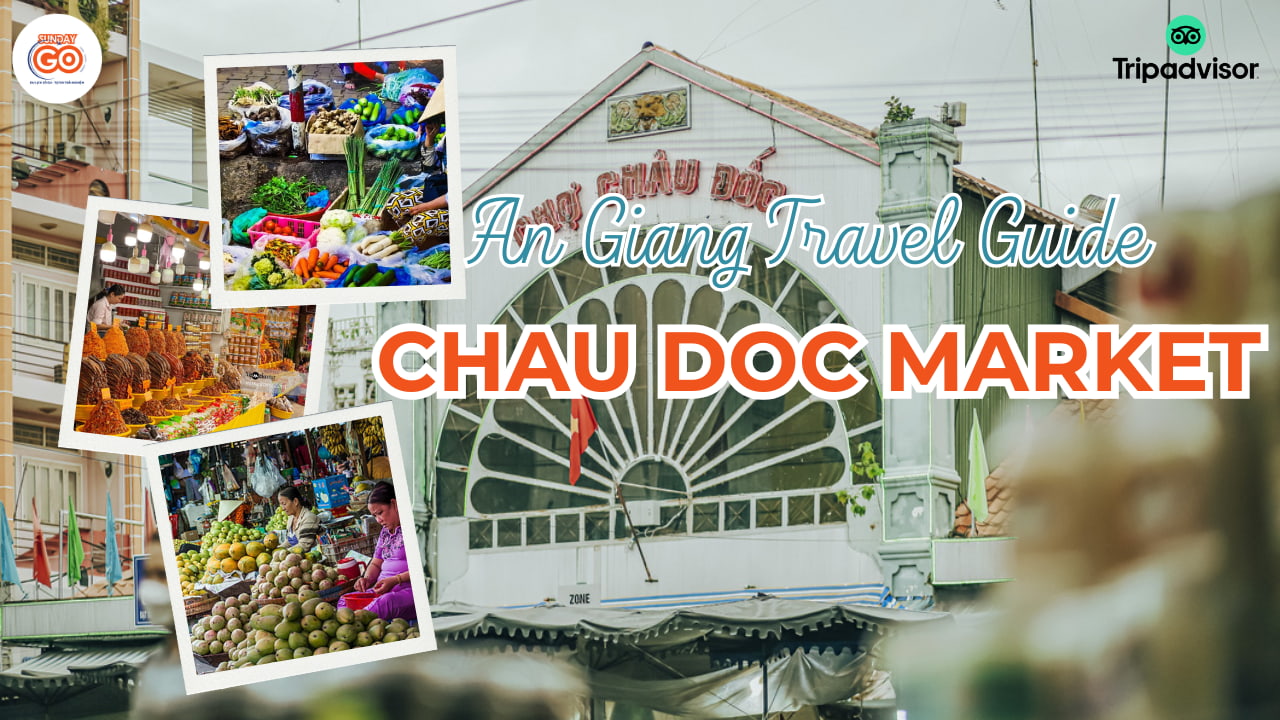
Chau Doc Market – locally called Chợ Châu Đốc—is the central market in Chau Doc City, An Giang Province, in Vietnam’s. Mekong Delta. It’s best known for bold local flavors (especially fermented fish “mắm”), fresh river produce, and the lively daily rhythm of a real Vietnamese market near the Vietnam–Cambodia border.
If you want an authentic experience in Chau Doc beyond the usual photo stops, this is one place where you can taste, hear, and feel the city in one walk.
Planning your visit (hours, best time, location)
Chau Doc Market opening hours
Travelers often search for “Chau Doc market opening hours” because market timing matters a lot in the Mekong Delta. In practice, the market runs daily, with the busiest period usually from early morning (around dawn) to late morning, when seafood, vegetables, and breakfast foods are freshest.
Some sections may stay active into the afternoon, but the energy is very different—more local errands, fewer “morning market” moments. Because hours can shift by season, holidays, and individual stalls, treat any exact time you see online as a guideline and ask your hotel or local guide for the latest update.
Best time to go
- Early morning: Cooler air, the most choices, the strongest “market atmosphere,” and the best chance to see local life.
- After breakfast: Easier pace, still plenty of food and snacks, better if you don’t like crowds.
Where it is (and how to get there)
Chau Doc Market sits in the center of Chau Doc, close to the river life that defines this town (the Hậu River / Bassac River area is part of the local identity). From most central hotels you can go by short taxi ride, motorbike taxi, or even walk, depending on where you stay.
If you’re arriving from farther away (Ho Chi Minh City, Can Tho, or the Cambodia border direction), visiting the market works best as part of a half-day or full-day plan—so you can combine it with river viewpoints, temples, or nature.
What makes Chau Doc Market special
Chau Doc is a cultural crossroads, shaped by Vietnamese, Khmer, Chinese-Vietnamese, and Cham communities. You can feel that mix in the market: spices, snacks, textiles, and ways of cooking that are distinct from big-city markets in Ho Chi Minh City.
The “Kingdom of Mắm” (fermented fish)
Many travelers come here because Chau Doc is famous for mắm—a family of fermented fish products that locals use in hotpots, dipping sauces, and everyday meals. The smell can be strong at first, but the flavor is rich, savory, and deeply “Mekong.”
Simple way to understand it: mắm is not just “smelly food.” It’s a preserved tradition built for river life—when fresh catch is abundant, and preserving is part of the culture.
How to try mắm comfortably (even if you’re cautious):
- Start with cooked dishes that use mắm as seasoning (hotpot or noodle soups), instead of buying a strong jar first.
- Ask for “less strong” options, and smell before you buy.
- If you plan to fly later, choose sealed packaging and keep it separate from clothes; some travelers also double-bag to avoid any scent transfer.
What to eat at Chau Doc Market (simple must-tries)
Chau Doc Market is a great place to taste Mekong Delta food in a casual way. Look for stalls with a steady local crowd and food that is cooked fresh and served hot.
Bún cá Châu Đốc (Chau Doc fish noodle soup)
This is one of the signature dishes of Chau Doc: fish, noodles, herbs, and a warm broth that often has a gentle yellow tone from turmeric. Many versions include local greens and seasonal ingredients that make it taste “river-fresh.”
Tip: If you like herbs, say yes—Mekong herbs are part of the experience.
Bánh bò thốt nốt (Palmyra palm sponge cake)
Made with thốt nốt (palmyra palm / sugar palm), this cake is lightly sweet and fragrant. It’s a great “easy win” for international travelers who want something local but not too adventurous.
Thốt nốt drinks and snacks
Chau Doc and nearby An Giang areas are known for palmyra palm products—refreshing in the heat. If you’re walking a lot, this is an easy way to cool down and recharge.
Street snacks you may see (and how to choose safely)
You’ll find grilled items, fried bites, sweet soups, and fruit cups. For a safer, stress-free approach:
- Choose stalls that cook in front of you.
- Pick foods served hot (steam is a good sign).
- Use bottled water, especially if you have a sensitive stomach.
What to buy (souvenirs, local goods, and smart shopping)
This is a working market first, but it’s also excellent for edible souvenirs and practical gifts.
Best things to shop for
- Mắm and sauces: Many types, from milder to very strong; good for food lovers who want a “real Chau Doc” taste.
- Dried seafood and snacks: Convenient for travel, easy to share.
- Spices, herbs, and tea: Great value and very local.
- Local textiles: Depending on the area and season, you may find fabrics and scarves influenced by the region’s multicultural life (including Cham-inspired patterns in broader Chau Doc shopping areas).
Bargaining (simple and respectful)
Bargaining is normal in many Vietnamese markets, but it should stay friendly.
- Smile, ask the price, and compare a couple of stalls if you can.
- If the price feels high, offer a lower price politely or ask for a small discount for buying more than one item.
- If you don’t agree, say thank you and walk away—no pressure.
Payment and practical notes
Cash is still very useful in local markets. Keep small notes ready, and store bigger bills separately so transactions stay quick and comfortable.
Easy itinerary ideas (market + nearby highlights)
Chau Doc Market becomes even better when you connect it to the places that explain Chau Doc’s story.
Half-day plan (easy pace)
- Morning at Chau Doc Market (food + browsing).
- Coffee break (watch local river life).
- Visit a nearby temple or local neighborhood street for photos and cultural context.
Full-day plan (top experience in An Giang)
- Early market visit for breakfast and shopping.
- River or floating-market style viewpoint/boat moment (depending on season and conditions).
- A cultural stop (Cham village area, if available on your route).
- Nature escape at Trà Sư Cajuput Forest (especially popular for calm scenery and birdlife).
- Sunset stop near Sam Mountain area if time allows (this region is closely linked with spiritual sites such as Bà Chúa Xứ Temple, depending on your interests).
Where Sunday Go fits (for international travelers)
If you prefer a smooth, English-friendly experience—especially if you’re short on time—Sunday Go can build a Chau Doc day plan that matches your travel style:
- Private driver or shared transport options.
- A market walk focused on the best foods for your comfort level.
- Add-ons like Trà Sư Forest, Sam Mountain area, boat experiences, hotel/resort booking, and onward travel planning (tickets, transfers, and more).
Conclusion
Chau Doc Market is not a “tourist show”—it’s Chau Doc’s everyday heart, where local culture, river ingredients, and bold Mekong flavors come together in one place. If you want to understand Chau Doc in a real way, go early, taste one signature dish, buy one local specialty, and let the market guide your senses.
When you’re ready, tell Sunday Go your travel dates and interests (food, culture, nature, photography, or comfort-first), and we’ll help you turn “Chau Doc Market” from a quick stop into a memorable Mekong Delta story.
