

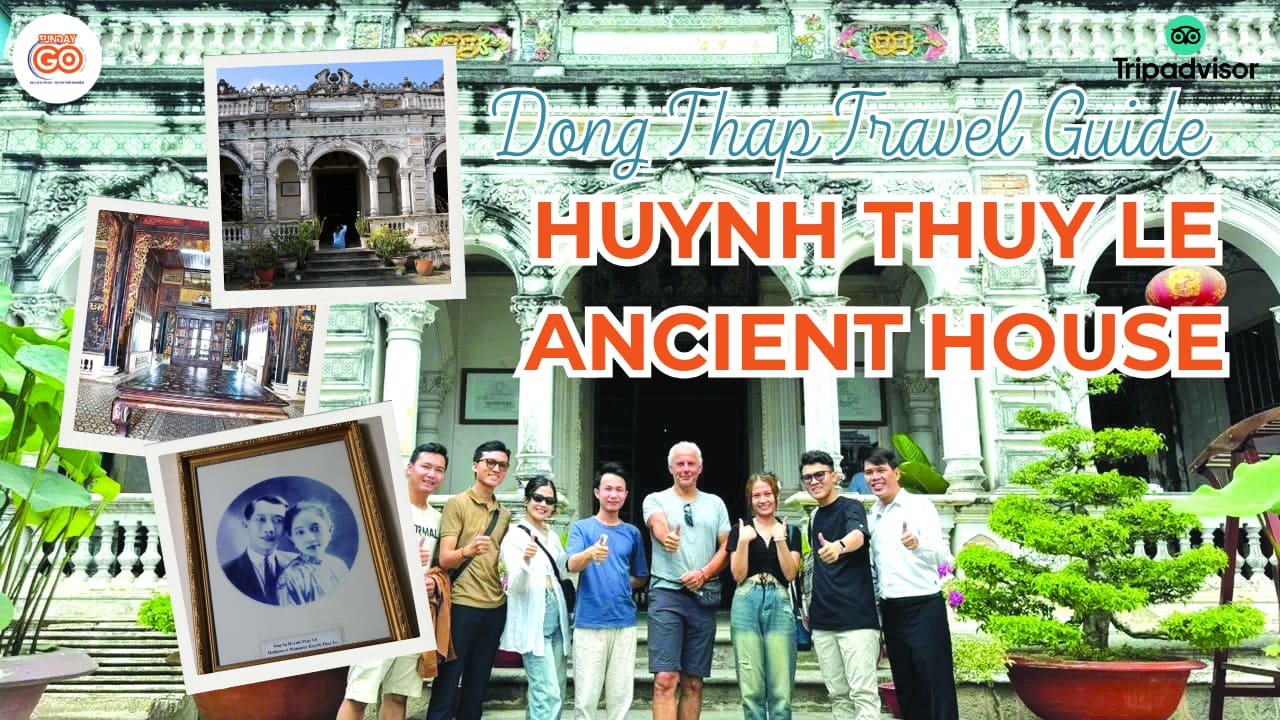
Imagine standing on a balcony overlooking the bustling Sa Dec riverfront, the air thick with the scent of tropical flowers and history. You are not just visiting a building; you are stepping into the pages of one of the world’s most famous romance novels.
For international travelers exploring the Mekong Delta, the Huynh Thuy Le ancient house is more than a tourist stop—it is an emotional landmark. Famous as the real-life setting behind Marguerite Duras’ acclaimed novel The Lover (L’Amant), this 131-year-old residence offers a haunting glimpse into a forbidden love affair that spanned continents.
At Sunday Go, we have spent over 5 years guiding travelers through the hidden gems of Vietnam. Whether you are a literature fan or an architecture enthusiast, this guide will help you uncover the secrets of the house that time—and love—forgot.
The History: A Forbidden Romance
To understand the house, you must understand the heartbreak that lives within its walls. Built in 1895 by Huynh Cam Thuan, a wealthy Chinese merchant, the house was inherited by his youngest son, Huynh Thuy Le.
In 1929, on a ferry crossing the Mekong River, the wealthy 27-year-old heir met a destitute 15-year-old French girl named Marguerite Duras. Their passionate but doomed affair became the subject of Duras’ Prix Goncourt-winning novel, The Lover.
While the novel is a work of art, the Huynh Thuy Le ancient house stands as the physical proof of their reality. However, their love was forbidden. His father forced him to marry a young Chinese woman to preserve family lineage, ending the affair with Duras. When you visit, you will see the photos of his arranged family life on the walls—a poignant reminder of duty over desire.
Architecture: A Masterpiece of East-West Fusion
What makes this structure unique in the Mekong Delta is its seamless blend of cultural styles. It is a textbook example of “Indochinese” architecture, but with a distinct twist that architectural buffs will appreciate.
The Exterior: French Renaissance
From the outside, the house resembles a French villa. You will notice the Romanesque arches, 19th-century reliefs, and Western-style columns. This was a status symbol, showing the Huynh family’s wealth and ability to adapt to the French colonial era.
The Interior: Traditional Chinese
Step across the threshold, and the Western facade vanishes. The interior follows a traditional three-bay structure typical of Chinese homes in the region.
- The Roof: Covered with Yin-Yang double tiles to regulate temperature.
- The Woodwork: The house frame is made of precious ironwood and timber, featuring intricate gold-lacquered carvings of birds, flowers, and bamboo.
- Feng Shui: Notice how the middle of the floor is slightly sunken. In local belief, this design allows water (symbolizing money) to flow into the house and stay there, ensuring the family’s prosperity.
The “Lover” Connection: Movie vs. Reality
As a travel expert, I often hear visitors ask: “Is this where the movie was filmed?”
Here is the truth that many generic guides miss: No.
When director Jean-Jacques Annaud filmed the 1992 movie adaptation of The Lover, the Huynh Thuy Le ancient house was being used as a government police office and was not available for filming. The movie scenes were actually shot at the Binh Thuy Ancient House in nearby Can Tho.
However, true fans know that this house in Sa Dec is the authentic location. This is where Huynh Thuy Le actually lived, slept, and dreamed. The soul of the story resides here, even if the cameras rolled elsewhere.
Inside the Experience: What to See & Do
Visiting the ancient house of Huynh Thuy Le is an intimate experience. The house is preserved remarkably well, allowing you to touch the history.
- The Altars: The central bay houses the altar of Guan Yu (Quan Cong), symbolizing loyalty and righteousness, a staple in Chinese merchant families.
- The Antiques: You will find a collection of artifacts, including a 100-year-old phonograph and distinct ceramic pieces that date back to the Qing dynasty.
- Photo Opportunities: For the best ancient house of Huynh Thuy Le photos, visit in the late afternoon when the sunlight filters through the stained glass windows, casting colorful shadows on the tiled floors.
Can You Stay Overnight?
Most tourists only spend 30 minutes here. But did you know you can stay the night?
Unlike a typical museum, the house offers a limited number of guest rooms for travelers who want a fully immersive experience. Staying overnight at Huynh Thuy Le’s ancient house is not about 5-star luxury; it is about atmosphere.
- The Experience: When the day-trippers leave, the house falls silent. You can sit on the balcony, sip tea, and watch the quiet life of Sa Dec passing by. It is a favorite experience for our “Sunday Go” clients who seek quiet reflection.
- The Cost: Room rates typically range from $30 to $50 USD per night. This often includes a simple breakfast and tea.
- Pro Tip: Rooms are limited and book up fast. Contact Sunday Go to reserve your stay as part of your Mekong Delta package.
Practical Guide: Visiting Sa Dec (2026)
Location & Opening Hours
- Address: 255A Nguyen Hue Street, Sa Dec City, Dong Thap Province.
- Opening Hours: 7:00 AM – 5:00 PM daily.
- Ticket Price: Approximately 20,000 VND – 40,000 VND per person (includes a guide and tea/ginger jam).
How to Get There
Sa Dec is about 140km from Ho Chi Minh City.
- By Bus: You can take a bus from Mien Tay Bus Station (approx. 3-4 hours).
- By Private Car (Recommended): For a comfortable journey, especially for families or older travelers, a private rental is best. Sunday Go offers premium car rental services with experienced drivers who know the best rest stops along the way.
Nearby Attractions
To make the most of your trip, Sunday Go recommends combining your visit with these nearby spots:
- Sa Dec Flower Village: One of the largest flower capitals in Vietnam. It is spectacular during the Lunar New Year season.
- Kien An Cung Pagoda: A stunning Chinese pagoda just a short walk from the ancient house.
- Xeo Quyt Forest: A historical revolutionary base hidden deep in the cajuput forest, perfect for a boat ride.
Conclusion
The Huynh Thuy Le ancient house is a rare destination where literature, history, and architecture converge. It is not just a building; it is a monument to a love that defied social boundaries. Whether you are reading ancient house of Huynh Thuy Le reviews or planning your own pilgrimage, nothing compares to walking through those wooden doors yourself.
