

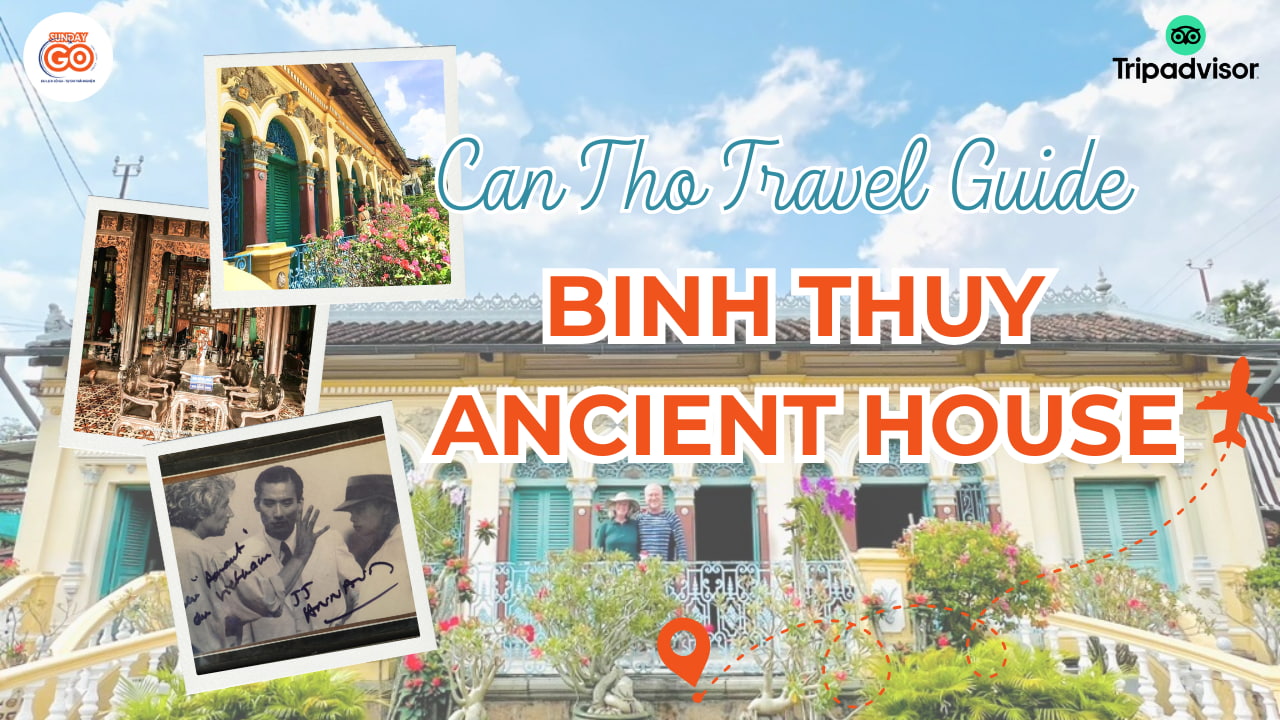
Binh Thuy Ancient House in Can Tho is one of the most beautiful old houses in the Mekong Delta, famous for its East–West architecture, rich family history and peaceful garden atmosphere. This guide gives you everything you need to know to visit, enjoy and include it in your Vietnam travel plan.
Why visit Binh Thuy Ancient House in Can Tho?
Binh Thuy Ancient House, also called the Duong family house, is a 150‑year‑old mansion in Can Tho City that shows how wealthy Southern Vietnamese families once lived. The house is a rare mix of French colonial villa style on the outside and traditional Vietnamese‑Chinese design on the inside, surrounded by a lush tropical garden and orchid collection.
For travelers, Binh Thuy Ancient House is a perfect cultural stop to combine with Cai Rang floating market, Ninh Kieu Wharf and other Mekong Delta highlights in Can Tho. It is small enough for a short visit, but detailed enough in its architecture and stories to make a strong impression on history and photography lovers.
Quick facts about Binh Thuy Ancient House
Here are key details at a glance so you can plan your visit to Binh Thuy Ancient House in Can Tho.
- Full name: Binh Thuy Ancient House, also known as the Duong family house or Binh Thuy Old House.
- Address: around 142–144 Bui Huu Nghia Street, Binh Thuy Ward, Can Tho City, Vietnam.
- Distance: about 6–10 km from downtown Can Tho, usually 15–25 minutes by car or motorbike depending on traffic and weather condition.
- Opening hours: commonly 8:00–12:00 in the morning and 14:00–18:00 in the afternoon; some sources mention continuous opening up to 16:00 or 18:00.
- Entrance fee: usually about 15,000–40,000 VND per person to go inside; walking around the exterior grounds is free.
- Management: the house is a national heritage site but is still owned and managed by the Duong family, so fees and opening times can change slightly.
- Visit duration: most visitors spend 30–60 minutes here.
These quick facts help answer common questions about Binh Thuy Ancient House entrance fee, opening hours and location before you arrive.
Binh Thuy Ancient House history: the story of the Duong family
The history of Binh Thuy Ancient House is closely linked to the Duong family, one of the old, wealthy families of the Mekong Delta.
Origins of the house
The Duong family first built an ancestral house here in the late 19th century on a large piece of land near Binh Thuy Creek. Early versions of the house were simpler, made mainly of wood and tiles, and used for ancestor worship and family gatherings. The location was chosen following feng shui principles: high ground, river nearby, and a layout that protected the family from floods and brought good fortune.
Reconstruction and completion
After the death of Mr. Duong Van Vi, an early patriarch, his son Mr. Duong Chan Ky rebuilt and expanded the house at the beginning of the 20th century. Construction was redesigned around 1904 and completed around 1911, giving the house much of the appearance you see today. Mr. Duong Chan Ky was a wealthy landowner and businessman influenced by Western trends, which explains the strong French colonial style in the house façade.
Cultural and spiritual role
Like many Southern Vietnamese family houses, Binh Thuy Ancient House was built not only for living but also for honoring ancestors. At the center of the house is an ancestral altar room with lacquered panels, wooden carvings and offerings that show the family’s respect for older generations. The layout follows feng shui rules, with a high foundation, balanced garden and symbolic decorative elements designed to protect the home and its residents.
Survival and heritage recognition
Over more than 100 years, Binh Thuy Ancient House has survived wars, economic changes and urban development in Can Tho. Today, it is listed as an official cultural and architectural heritage site, yet the Duong family still lives there and looks after most of the furniture and antiques. This combination makes it feel like a living museum where you step into a real home rather than a closed, empty monument.
Binh Thuy Ancient House on screen
Because of its classic look and romantic atmosphere, Binh Thuy Ancient House has been used as a film location in both international and Vietnamese movies. The house is known among film lovers as one of the Mekong Delta sets for the famous French film “The Lover” and other local productions, music videos and photo shoots. This film connection adds to the charm of visiting, especially for travelers who love cinema and old architecture.
Architecture highlights: where East meets West
The architecture of Binh Thuy Ancient House is one of the main reasons it is so popular in Can Tho. It is a textbook example of East–West cultural blending in the Mekong Delta.
Overall layout and grounds
The estate covers around 6,000–8,000 square meters, including the main house, front yard and a spacious garden. The building is arranged along an East–West axis and divided into front, middle and back sections, a common pattern in traditional Southern Vietnamese homes. The foundation is raised high, helping the house avoid flooding from the nearby river and keep the interior dry and cool in the humid Mekong climate.
The garden around the house is carefully designed with ornamental plants, old trees, and an orchid area that has become one of the most photographed parts of the site. A rock formation with a small pond, shrines and side gates add layers of meaning and create a peaceful, almost temple‑like atmosphere.
French colonial façade
From the outside, Binh Thuy Ancient House looks like a small European villa rather than a typical Vietnamese rural house. The façade features:
- Curved staircases leading to a raised terrace.
- Arched doorways and windows.
- Decorative columns with Greco‑Roman motifs.
- Stucco ornamentation and wrought‑iron railings.
Bright painted walls and patterned tiles give it a gentle, romantic look, especially in the early morning or late afternoon light. This front view is one of the most popular spots for Binh Thuy Ancient House photos among both local and international tourists.
Traditional interior with Vietnamese and Chinese details
Once you step inside, the style changes and clearly shows Vietnamese and Chinese influences. The interior includes:
- A wooden frame structure with carved beams and columns.
- Ancestral altar area with lacquer, gold inlay and Chinese characters.
- Heavy wooden furniture, antique cabinets and beds.
- Old floor tiles, decorative lamps and porcelain vases.
The space is arranged by function and hierarchy, with the central hall as the most sacred place, and side rooms for living, sleeping and receiving guests. This creates a strong feeling of stepping back into the daily life of an upper‑class Southern Vietnamese family from a century ago.
Unique features and feng shui
Several details make Binh Thuy Ancient House particularly interesting for visitors who like architecture and culture.
- The main floor is raised high and supported by a solid base to protect against floods.
- There is said to be a layer of salt and sand under the floor, a traditional method to control humidity and pests in the old days.
- The three‑gate entrance, rock garden, and altars follow feng shui rules, balancing water, stone and trees for harmony and protection.
These elements show how the Duong family combined modern Western aesthetics with local knowledge and spiritual beliefs to build a comfortable and symbolically safe home.
Visitor guide: opening hours, entrance fee and etiquette
For many travelers, the most important questions are about Binh Thuy Ancient House entrance fee, opening time and how to behave in a family‑owned heritage house.
Opening hours
Different sources give slightly different opening times, but most agree on two main visiting sessions.
- Morning: around 8:00–12:00.
- Afternoon: around 14:00–18:00 (some guides mention closing at 16:00).
Because the house is still managed by the Duong family, it often closes at midday so the owners can rest, and parts may occasionally be closed for private events. For the smoothest experience, aim to visit during mid‑morning or mid‑afternoon on weekdays, when crowds are smaller and light is good for photos.
Entrance fee and what it includes
Most recent travel guides and reviews mention that entrance to the grounds is free if you only walk outside, but you pay a ticket to go inside the house.
- Typical entrance fee: around 15,000–40,000 VND per person to enter the interior, depending on the period and source.
- In some cases, extra services such as guided tours or professional photography may have additional charges, usually arranged directly with the owners or local guides.
The fee is not set by the government but by the Duong family, because the property is still privately owned even though it has heritage status. You normally pay a family member or caretaker inside the house, and there may not be an official ticket booth or sign.
Etiquette and dress code
Binh Thuy Ancient House is not a museum in the strict sense but a living family home and ancestral place. Visitors should:
- Dress modestly (cover shoulders and knees if possible), especially when approaching the altar area.
- Speak quietly and avoid running or shouting inside.
- Do not touch fragile antiques or sit on furniture unless obviously used for visitors.
- Ask before taking close‑up photos of family members or private spaces if someone is present.
Following these simple rules helps protect the heritage and shows respect for the Duong family traditions.
How to get to Binh Thuy Ancient House in Can Tho
Reaching Binh Thuy Ancient House is easy from downtown Can Tho or Can Tho airport.
From Ninh Kieu Wharf/ downtown Can Tho
- Taxi or ride‑hailing: a convenient option, especially under the heat; fares are still affordable for most travelers.
- Motorbike or scooter: ideal for independent travelers; several streets follow the river and give you a local view of Binh Thuy District.
Most mapping apps know “Binh Thuy Ancient House Can Tho”, so you can search the name directly to navigate there.
From Can Tho airport
Can Tho International Airport is around 8–12 km away, and a taxi ride to the house normally takes 20–30 minutes. If you have limited time between flights or stay near the airport, you can combine a quick visit to the house with a short look at the riverside before returning.
Visiting with a tour
Many Can Tho city tours and Mekong Delta tours include Binh Thuy Ancient House as one of their cultural stops. Joining a tour gives you door‑to‑door transfers, a guide to explain the history and architecture, and easy combination with other attractions such as Cai Rang floating market and Binh Thuy communal house. Sunday Go, with more than five years of experience in domestic and international tourism, can easily integrate Binh Thuy Ancient House into daily or multi‑day packages for travelers aged 22–60 who value comfort and cultural depth.
What to see and do at Binh Thuy Ancient House
Although the house is not large, there is plenty to enjoy if you walk slowly and look carefully.
Explore the main hall and antiques
The central hall is the heart of Binh Thuy Ancient House. Here you can see:
- The ancestral altar with lacquer, gold inlay, incense, and offerings.
- Wooden cabinets with porcelain, teapots, and decorative pieces.
- Old photographs of the Duong family and historical figures.
- Carved wooden screens and doors separating different sections.
Take time to notice the details: flower motifs, mythological animals, and patterns that blend Chinese and Vietnamese symbolism. If a guide or family member is available, listening to their stories will help you understand how people used these rooms in daily life more than 100 years ago.
Walk through living spaces and side rooms
Side rooms often show beds, wardrobes and other pieces of furniture that belonged to the family. Some visitors comment that the rooms feel “full” of objects, making the house look a bit cluttered but also very authentic. Walking respectfully through these areas gives you a sense of the private life behind the formal façade.
Enjoy the garden and orchids
Outside, the garden is one of the most charming parts of Binh Thuy Ancient House. The grounds include:
- Orchid collections hanging from trees or displayed in pots.
- Old tropical trees and carefully trimmed shrubs.
- A rock formation with a small fish pond and shrine.
- Small paths and corners perfect for quiet photos or a short rest.
Many travelers say the garden makes the house feel peaceful, especially compared to the busy streets of central Can Tho. It is also a favorite background for pre‑wedding photo shoots and fashion pictures.
How to combine Binh Thuy Ancient House with nearby attractions
Binh Thuy Ancient House is easy to include in a larger Can Tho itinerary.
Suggested half‑day itinerary
A popular way to structure a half‑day around the house is:
- Early morning: Cai Rang floating market, local breakfast on the boat.
- Late morning: visit Binh Thuy Ancient House, enjoy the architecture and garden.
- Lunch: local restaurant in Binh Thuy District or back near Ninh Kieu Wharf.
This plan gives you both river life and heritage architecture in one morning.
Suggested full‑day itinerary
With a full day in Can Tho, you can add more cultural stops.
- Morning: floating market and small water coconut canals by boat.
- Late morning: local rice noodles workshop or fruit garden, lunch with Mekong specialties.
- Afternoon: Binh Thuy Ancient House and Binh Thuy communal house or Long Tuyen ancient village.
- Evening: walk around Ninh Kieu Wharf and night market.
This kind of itinerary gives you a complete picture of the Mekong Delta: river, village, city and heritage buildings.
Visiting with Sunday Go
Sunday Go specializes in tour packages, travel combos and services for both domestic and international visitors, including transport, high‑speed boat tickets, hotels and guided city tours. For Binh Thuy Ancient House, Sunday Go can:
- Include the house in customized Can Tho city tours with an English‑speaking guide and comfortable transport.
- Organize private photo or film‑focused visits for guests who want more time for Binh Thuy Ancient House photos.
- Combine the house with floating markets, eco‑tourism sites and top restaurants in tailor‑made Mekong Delta itineraries.
This approach follows a people‑first, helpful content mindset by turning information into real, easy‑to‑book travel solutions that fit the needs of 22–60‑year‑old travelers with good incomes.
FAQ about Binh Thuy Ancient House
Where is Binh Thuy Ancient House in Can Tho?
It is located at around 142–144 Bui Huu Nghia Street, Binh Thuy Ward, Binh Thuy District, about 6–10 km from downtown Can Tho.
How much is the entrance fee at Binh Thuy Ancient House?
Most sources mention a fee of about 15,000–40,000 VND per person to enter the house, while walking around the exterior is usually free.
How long should I spend there?
Most visitors spend 30–60 minutes exploring the house and garden, longer if they take many photos or have a guide explaining the history.
Is there a dress code?
There is no strict dress code, but modest clothing is recommended because of the ancestral altar and the fact that it is a family home.
Can I take photos inside Binh Thuy Ancient House?
Yes, casual photography is generally allowed, and many visitors share their pictures online; for professional shoots or tripods, you should ask for permission and be ready to pay extra if requested.
Visit Binh Thuy Ancient House with Sunday Go
Binh Thuy Ancient House is more than just a pretty building; it is a living story of the Mekong Delta, where French colonial design meets Vietnamese traditions in one elegant home. When you walk through its doors, you can imagine the lives of Southern elites, feel the calm of the orchid garden, and capture photos that reflect a side of Vietnam many tourists never see.
With more than five years of experience in Vietnam’s tourism industry and a focus on both domestic and international guests, Sunday Go is well placed to turn this cultural highlight into a smooth and memorable part of your journey. Whether you prefer a simple half‑day Can Tho city tour, a full Mekong Delta package including Binh Thuy Ancient House, or a customized trip centered on heritage and photography, Sunday Go can design the tailored tour, arrange transport and tickets, and provide guides who bring the house’s stories to life.
If you are planning to explore Can Tho and the wider Mekong Delta, consider adding Binh Thuy Ancient House to your itinerary and let Sunday Go help you experience this timeless place in the most comfortable and meaningful way.
